
Samosa: What It Is and How It Is Made
A samosa is a filled pastry made by enclosing a savoury or sweet filling in a pastry wrapper. To make one, prepare the dough and filling, fold and seal the wrapper, then fry, bake or air fry the parcel; its familiar triangular shape is common, but not essential.
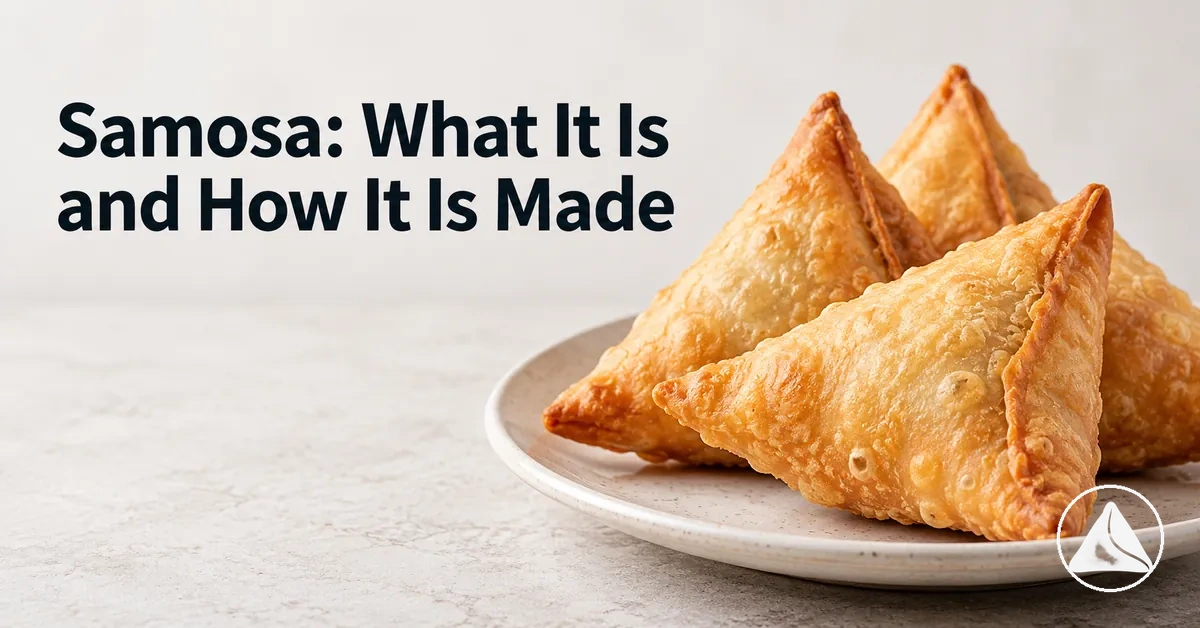
Samosa at a glance
Two parts. Three preparation phases.
Every samosa combines an outer pastry with an enclosed filling. Preparation brings those parts together before the sealed pastry is cooked.
- Outer part
- Pastry wrapperContains the filling and becomes the cooked crust.
- Inner part
- FillingSupplies flavour and texture; ingredients vary by style.
- PrepareMake a workable dough and a filling that can be portioned.
- Shape and sealEnclose the filling and close the pastry seam.
- CookFry, bake or air fry until the pastry is cooked and crisp.
What may change: the filling, wrapper style, shape and cooking method. These variations do not change the basic filled-pastry construction. Explore the five preparation stages.
Table of Contents
What Is a Samosa?
A samosa is a sealed pastry parcel with a filling, which can be savoury or sweet. Its defining feature is the relationship between the wrapper and the enclosed filling, not any one ingredient or shape.
In many South Asian versions, a triangular pastry surrounds a spiced potato filling, often with peas. This is a familiar example rather than the only authentic form.
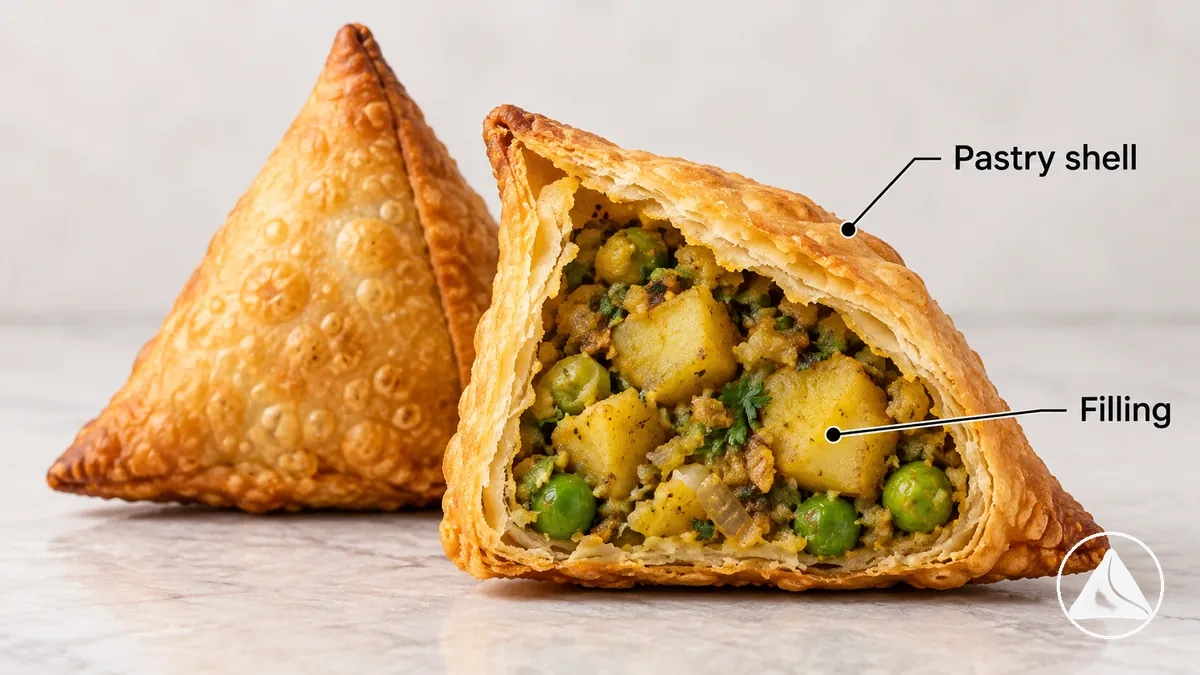
Other samosas can use different fillings, wrappers and shapes, and may be fried or baked. They are commonly served as snacks or starters, sometimes with chutney; these serving habits do not define the pastry itself.
Where Samosas Come From
The samosa's history is broader than its strong modern association with South Asia. Earlier filled-pastry traditions are linked to Central Asia and parts of the Middle East, although one precise birthplace or inventor has not been firmly established.
- Earlier roots
- Related filled pastries were known beyond South Asia; the exact geographic starting point remains uncertain.
- Spread and adaptation
- Trade, migration and culinary exchange helped carry samosa traditions into the Indian subcontinent, with the spread commonly placed around the 13th or 14th century.
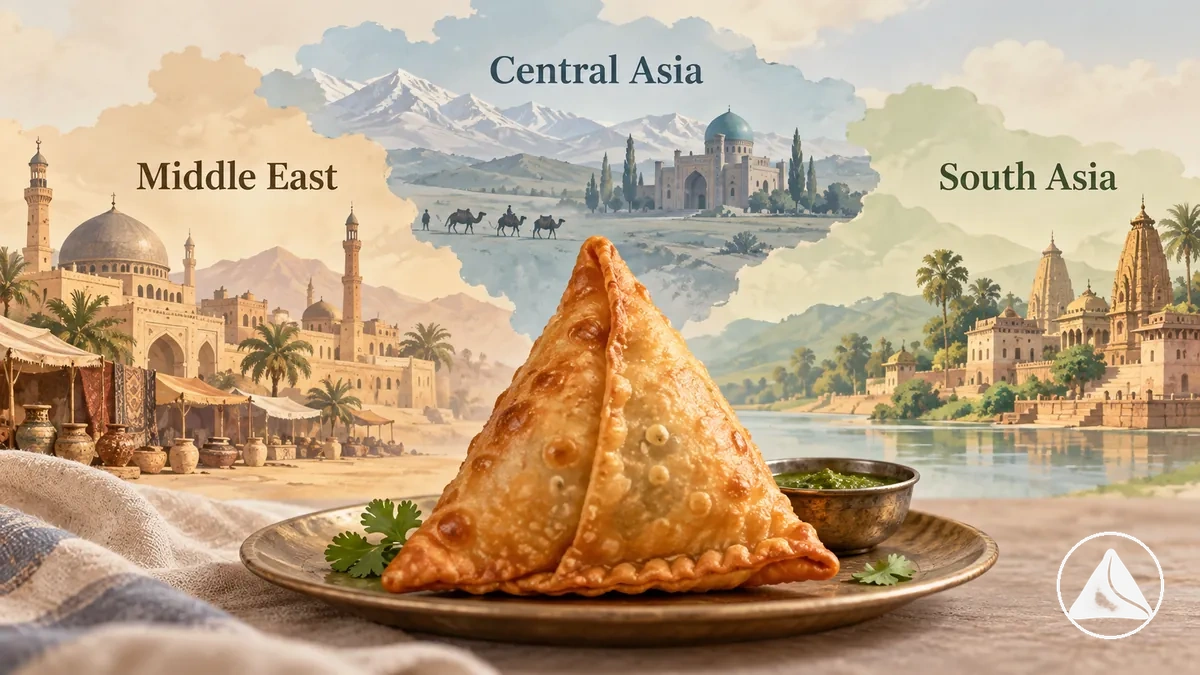
South Asian cooks subsequently developed distinctive regional fillings, wrappers and preparation practices. The samosa's modern South Asian identity is therefore clearer than the precise location of its earlier beginnings; the illustration indicates broad historical regions, not a proven point of origin.
What Samosas Are Made Of
A samosa has two essential components: a pastry shell that contains the filling and becomes the cooked crust, and a filling that provides flavour and texture.
The cutaway image separates these parts to show their different functions.
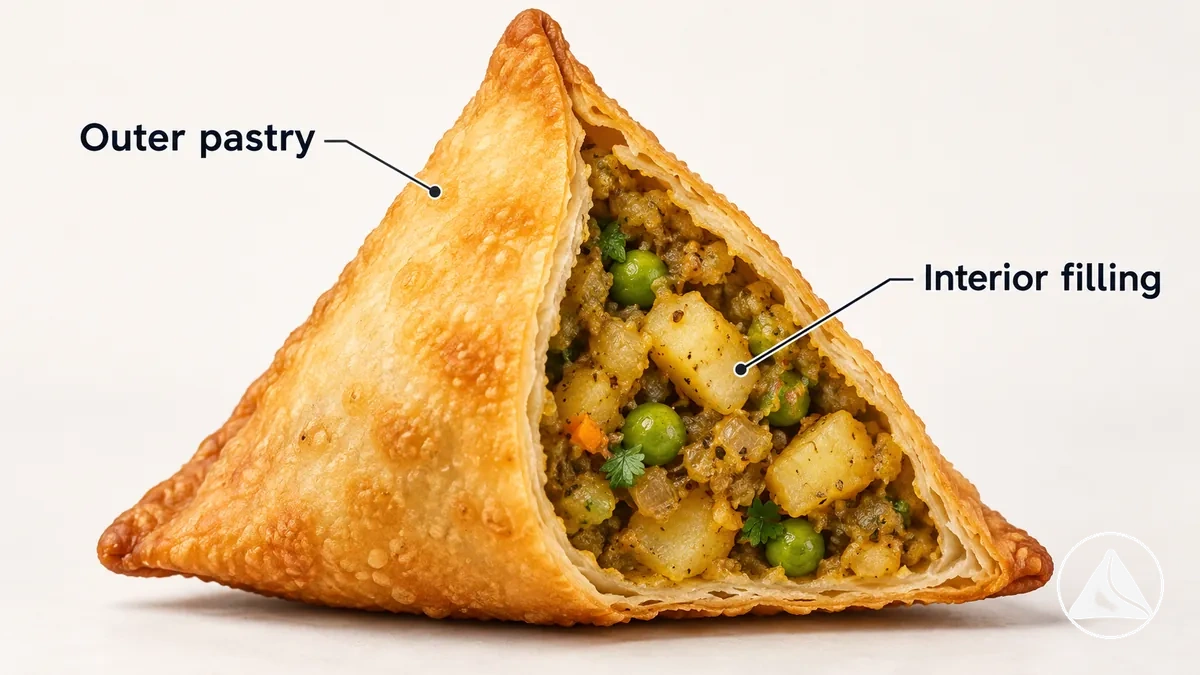
Many traditional South Asian wrappers use wheat flour, water and fat, such as oil or ghee, sometimes with salt. The filling can contain vegetables, legumes, meat, cheese, spices or sweet ingredients; there is no universal ingredient list.
Pastry flexibility affects whether the wrapper can be folded and sealed, while filling moisture affects how easily it can be enclosed and how crisp the crust remains after cooking.
Samosa Pastry
Samosa pastry is the dough wrapper that encloses the filling, holds the folded shape and becomes the outer crust when cooked.
Common traditional-style doughs use wheat flour (often plain flour or maida), fat such as oil or ghee, water and sometimes salt. Hydration and thickness affect how easily the dough rolls, folds and seals.
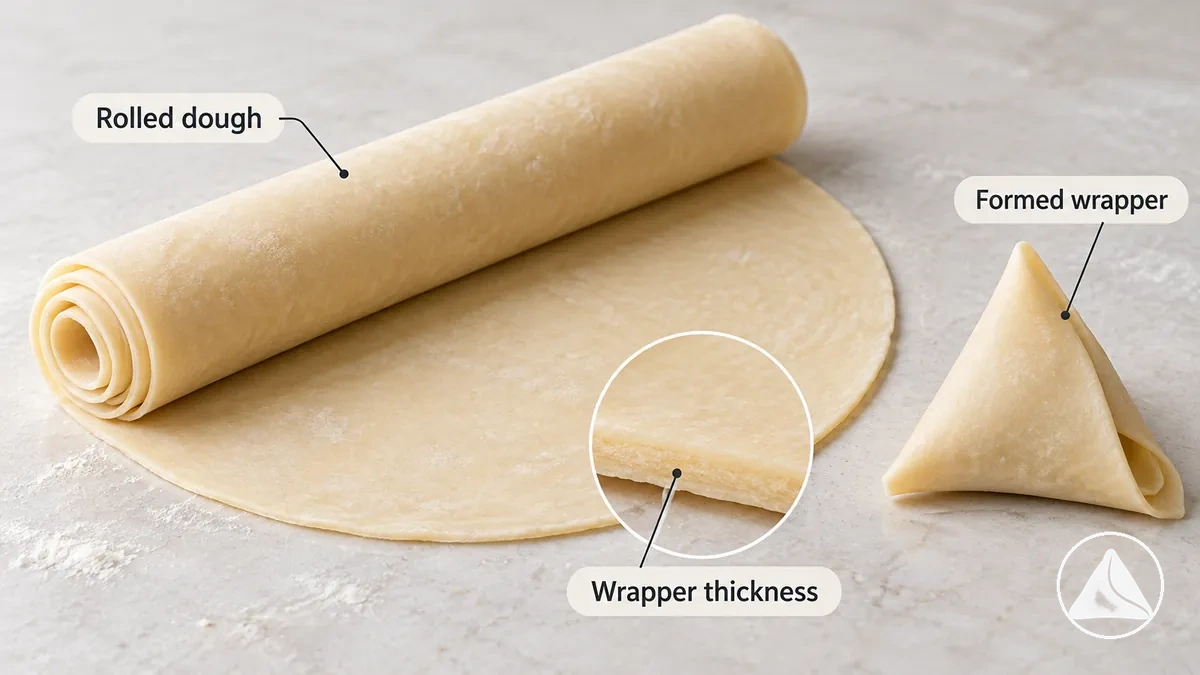
The wrapper is not limited to one dough formula. Filo, puff pastry and other wrappers are also used, but can require different shaping and cooking techniques and give different textures.
Each pastry attribute has a practical effect:
- Flour: provides the main dough structure and helps the wrapper retain its form during shaping.
- Fat: contributes to the pastry structure and may help produce a crisp texture after cooking.
- Water and hydration: bring the flour into a cohesive dough, while hydration can affect whether the dough feels firmer, softer, or easier to handle.
- Thickness: the wrapper needs enough flexibility to fold without splitting and enough strength to hold the filling; thicker pastry can cook differently from thin pastry.
- Wrapper style: traditional-style dough, filo, puff pastry, and other wrappers may produce different handling and finished-texture characteristics.
For quantities, kneading and rolling technique, see the samosa dough guide.
Samosa Filling
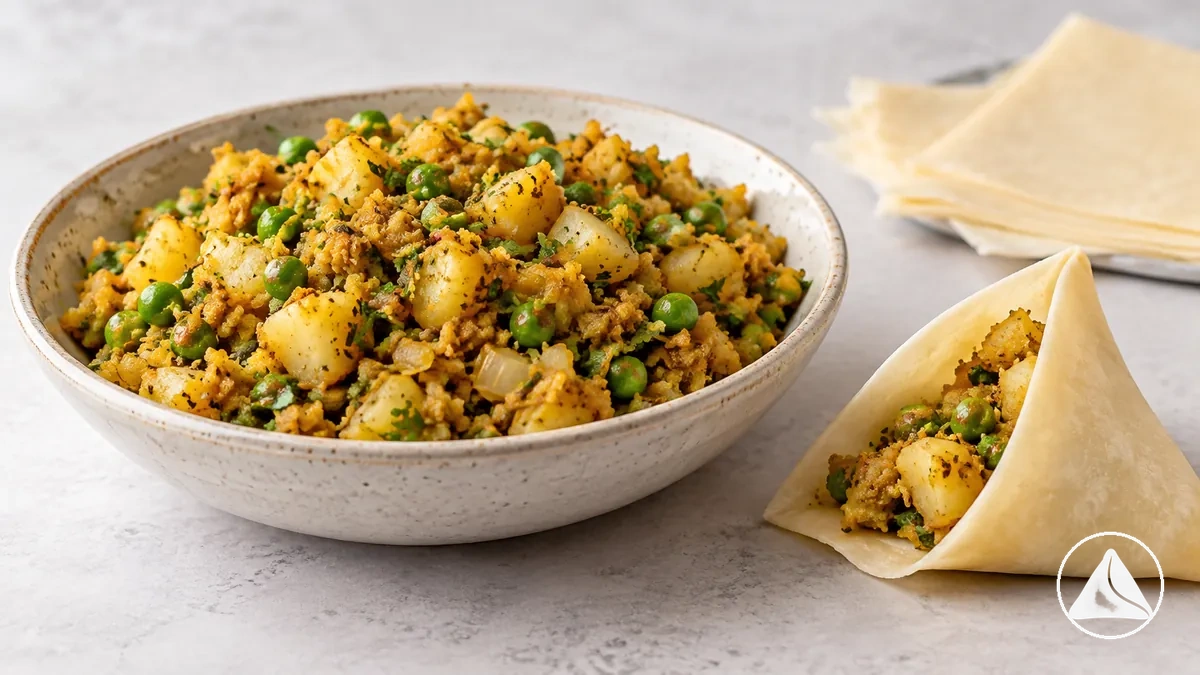
Samosa filling is the enclosed mixture that supplies much of the pastry's flavour and interior texture. A common savoury example combines spiced potato and peas; other recipes use vegetables, legumes, meat, cheese or sweet ingredients.
The prepared mixture needs a texture that can be portioned and held inside the wrapper, as the image illustrates.
- Texture
- A cohesive, portionable mixture is easier to wrap and less likely to push through a folded seam than a very loose mixture.
- Moisture
- Excess liquid can soften the pastry and may increase leakage during cooking. Drain or cook off surplus moisture when the particular filling requires it.
- Seasoning
- Herbs, spices and other seasonings change the flavour without changing the filling's structural role inside the pastry.
When a filling is cooked before assembly, let it cool enough to handle without steaming the wrapper. For detailed preparation methods, see samosa filling preparation.
How Samosas Are Made
Samosa preparation follows five main stages: prepare the pastry dough, prepare the filling, shape and fold the wrapper, seal the seam and cook the assembled pastry.
This is a high-level sequence rather than a single universal recipe; the image illustrates the stages from separate ingredients to a cooked samosa.
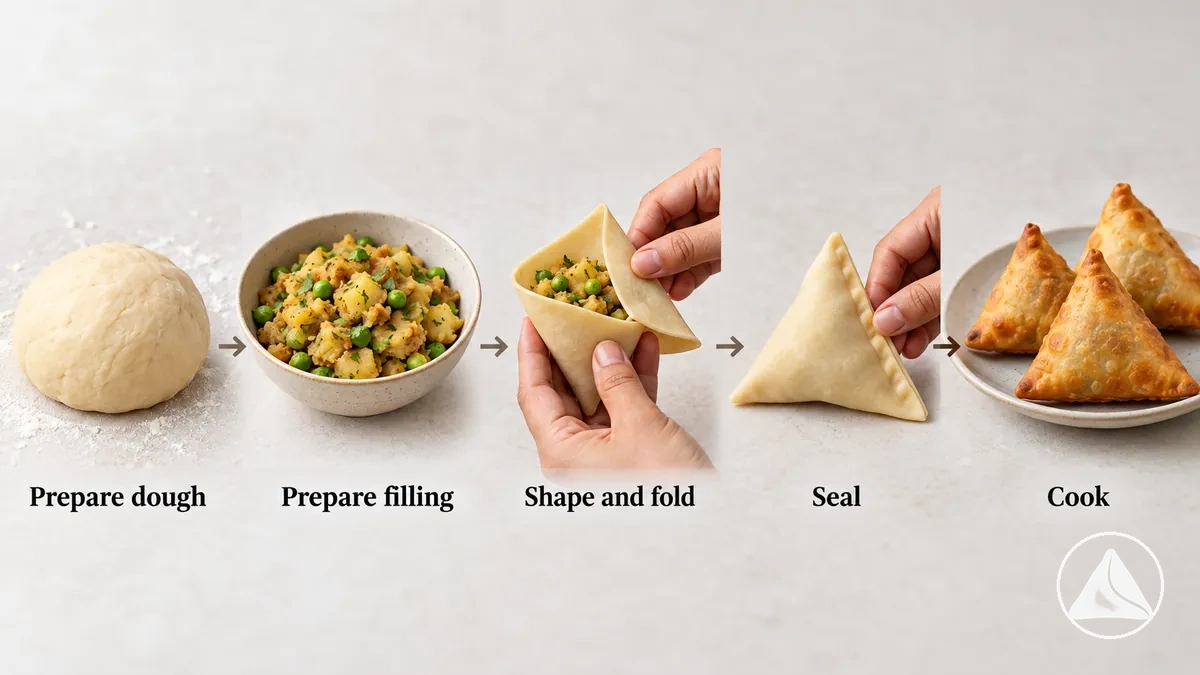
- Prepare the dough: Make the pastry dough and allow it to become workable enough for rolling and shaping.
- Prepare the filling: Make the filling and let it reach a suitable texture for enclosing in the pastry.
- Shape and fold: Portion the dough, form the wrapper, add the filling, and fold it into the intended samosa shape.
- Seal: Close the pastry seam so the wrapper can hold the filling during cooking.
- Cook: Fry, bake, or air fry the assembled samosas according to the chosen method until the pastry is cooked and develops a crisp exterior.
For make-ahead preparation, distinguish between uncooked assembled samosas and already cooked samosas: they need different handling to protect pastry texture and food safety. See the storage guide for the relevant method.
Prepare the Pastry and Filling
Before assembly, both components should be ready to shape and seal. The dough needs to roll and fold without excessive stiffness; the filling needs to hold together without wetting the seam.
Use the following readiness cues rather than assuming one resting time or moisture level applies to every recipe:
- Pastry readiness — firmness: the dough should be workable enough to roll, shape, and fold without being excessively stiff or difficult to handle.
- Pastry readiness — rest: where required by the recipe, resting should leave the dough manageable for assembly rather than specifying one universal resting time.
- Filling readiness — texture: the prepared filling should be cohesive enough to portion into the pastry without making shaping or sealing unnecessarily difficult.
- Filling readiness — moisture and cooling: moisture should be controlled so the mixture is manageable at the seam, and the filling should be cool enough for assembly where the preparation method requires cooling.
Shape and Seal the Samosa
Assembly encloses a manageable portion of filling inside a wrapper, forms the chosen shape and closes the joining edges so the pastry stays together during cooking.
A triangle is common, but the same four-part logic also applies to other shapes. Wrapper thickness, filling load and the quality of the seam all influence whether the parcel holds together.
- Form the wrapper: Prepare a wrapper with enough area and workable thickness to hold the intended filling portion while allowing the edges to meet.
- Add the filling: Place a manageable portion inside the wrapper while keeping the seam area clear enough for closure.
- Fold into shape: Fold the wrapper into the chosen form, such as a triangular pocket, while keeping the filling contained inside the pastry.
- Seal the seam: Press the joining edges into a continuous seam. Depending on the wrapper, a little water or flour-and-water paste can help the edges adhere; keep the seam clear of filling.
Cook by Frying, Baking, or Air Frying
Frying, baking and air frying all cook the pastry, but differ in how heat reaches it and how much oil contacts its surface. Deep-frying immerses the pastry in hot oil, baking surrounds it with oven heat, and air frying uses rapidly circulating hot air.
Compare the methods by heat medium, typical texture, oil exposure and practical requirements. Crispness and browning still depend on the wrapper, filling, equipment and cooking conditions, so the differences are tendencies, not guarantees.
| Method | Heat medium | Typical texture | Oil exposure | Practical context |
|---|---|---|---|---|
| Frying | Direct immersion in hot oil transfers heat across the pastry surface. | The pastry tends to develop pronounced crispness and even browning when frying conditions are well controlled. | The samosa is in direct contact with cooking oil and may absorb some oil during cooking. | A common traditional cooking route that requires enough oil and suitable frying equipment. |
| Baking | Dry oven heat cooks the pastry through surrounding hot air and heated surfaces. | The pastry can become crisp and browned, although its surface texture may differ from fried pastry. | Oil exposure is generally limited to oil in the pastry or any oil applied to its surface. | A practical option when oven-baking is preferred and the pastry is suited to dry heat. |
| Air frying | Rapidly circulating hot air transfers heat around the samosa inside the equipment. | The pastry may develop crispness and browning, with results influenced by airflow, spacing, and pastry characteristics. | Direct oil exposure is typically lower than immersion frying, although some preparations may use surface oil. | A practical option when suitable air-frying equipment is available and the samosas can be spaced for air circulation. |
Choose frying when an oil-cooked crust is the priority and suitable frying equipment is available. Choose baking for an oven-suited wrapper without immersion in oil, or air frying when an air fryer allows enough space for airflow. In every case, cook the pastry through rather than judging readiness from colour alone.
Common Types of Samosas
Samosas can be classified by filling, regional style and physical shape. These are overlapping attributes, not three mutually exclusive categories.
- By filling
- Savoury or sweet; savoury examples include vegetable, legume and meat fillings.
- By regional style
- Local names and traditions may reflect the pastry, seasoning, filling or preparation method associated with a place.
- By shape
- Examples include triangular, cone-like and crescent-shaped parcels; no single shape applies to all styles.
A single samosa may be described by all three dimensions at once—for example, a triangular South Asian-style samosa with a savoury potato filling. The variations below illustrate these dimensions rather than forming one fixed taxonomy.
Vegetable, Meat, and Sweet Variations
Vegetable, meat, and sweet samosas are broad filling-based variations rather than fixed recipes.
The pastry format can remain similar while the filling composition, flavour direction, and use of spices vary by recipe and region.
- Vegetable: Vegetable fillings may include potato and peas with spices, alongside other vegetable combinations depending on the recipe and regional style.
- Meat: Meat fillings commonly use minced meat, with examples including lamb or chicken combined with seasoning and spices; the specific mixture can vary by region and preparation style.
- Sweet: Sweet samosas may contain fruit, dairy-based mixtures, chocolate, or spiced sweet fillings, with the ingredients differing according to the particular recipe and regional variation.
Regional and Shape Variations
Regional style describes a culinary tradition—such as local ingredients, filling, pastry or preparation—whereas shape describes the physical form of the filled parcel. One does not reliably determine the other.
For example, triangular samosas with spiced potato fillings are common in parts of South Asia, while other traditions may favour smaller parcels, different wrapper textures or meat and legume fillings. Shapes can also include cone-like and crescent forms.
These examples are not a universal map of regional styles: a regional name does not guarantee one particular filling, size or shape, and a shared shape does not make two preparations identical.
Common Samosa-Making Problems
Cracked pastry, opening seams, greasiness and sogginess are symptoms, not proof of one cause. Start with the variable most closely connected to the symptom: dough workability, filling load and moisture, seam closure, cooking conditions or handling after cooking.
The table pairs each symptom with possible causes, a useful check and a corrective direction. Different problems can share a cause, and one problem can have several contributors.
| Symptom | Possible Cause Group | Check | Corrective Direction |
|---|---|---|---|
| Cracked pastry | Dough condition, dryness, or handling can contribute to cracking. | Check whether the dough remained workable during rolling, folding, and shaping or became dry and prone to splitting. | Keep unused dough covered if it is drying out, and check whether hydration and rolling pressure are making the wrapper prone to splitting. |
| Opening or bursting | Weak sealing, excess filling pressure, or filling moisture can contribute to seam failure during cooking. | Check whether the seam was fully closed and whether the filling made the wrapper difficult to seal without strain. | Try a smaller filling portion, keep the joining edges clear, and form a continuous seal; also check for excess filling moisture. |
| Oily or greasy texture | Frying conditions and the way the pastry cooks in oil can contribute to greater oil uptake. | Check whether the oil stayed steadily hot during frying and whether overcrowding cooled it; cooler oil can contribute to a greasier result. | Keep oil heat consistent and fry in manageable batches before changing the dough or filling formula. |
| Soggy or not crispy pastry | Moisture, cooking conditions, or post-cooking handling can reduce crispness. | Check whether the pastry cooked sufficiently and whether steam or retained moisture softened the surface afterward. | Check pastry doneness and filling moisture first; if it softened after cooking, allow steam to escape rather than trapping it while hot. |