
Common Samosa-Making Mistakes to Avoid
To avoid common samosa-making mistakes, use firm but workable dough, cooled, relatively dry filling, an even wrapper and a fully closed, unstressed seam; then fry at controlled heat so the pastry cooks without becoming greasy or darkening too quickly. If a samosa cracks, leaks, turns soggy or browns unevenly, trace that sign back through preparation, folding and frying—the symptom is a clue, not proof of a single cause.
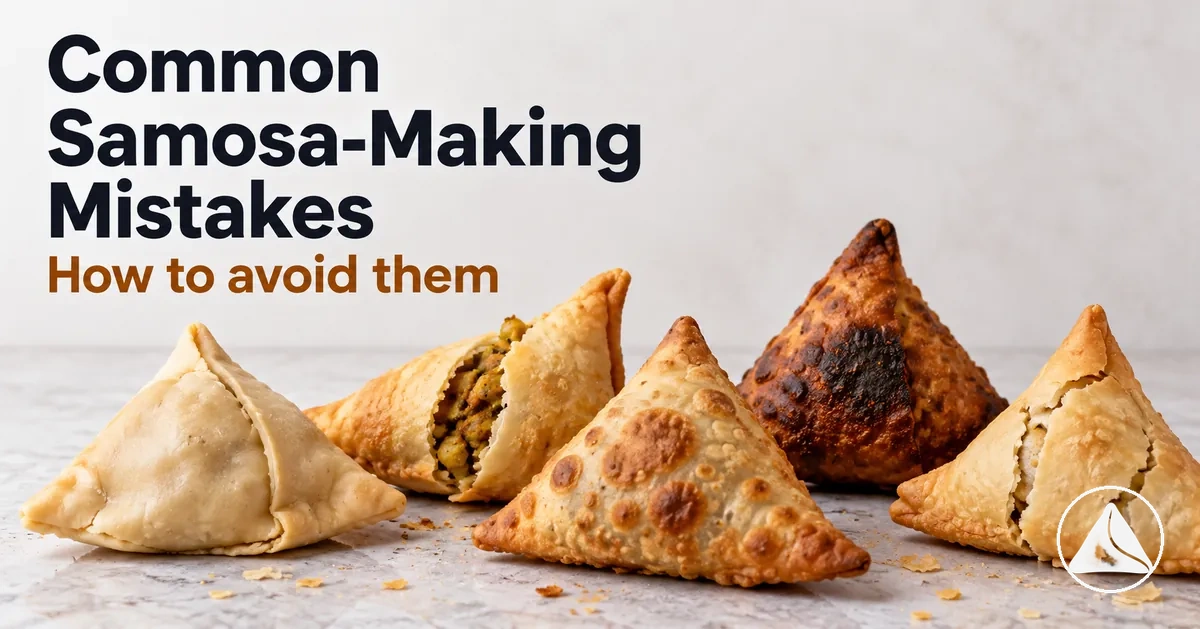
FOUR-STAGE CHECK + SYMPTOM FINDER
Find the samosa-making step to check first
Start with the four stages below, then choose what you noticed. The result gives a first check, a useful adjustment and other possible contributors.
- DoughFirm and workable, without severe sticking or cracking
- FillingCool, relatively dry and small enough to fit
- SealingEven wrapper, aligned edges and complete closure
- FryingControlled heat, steady cooking and an intact crust
Start with: Folding and sealing
- Check first
- Look for a gap in the seam, filling pressed against the edges or a visibly strained wrapper.
- Next adjustment
- Reduce excess filling, clear the seam and press the wrapper edges together before frying the next samosa.
- Also consider
- Uneven pastry, dough weakness and frying conditions may also contribute to a burst or leak.
How to interpret this: More than one mistake can create the same visible result. Compare the suggested check with what happened during your batch before changing the method.
Problems can develop at one stage and become visible at another. Dry or sticky dough can make a wrapper difficult to shape, while warm or wet filling and a stretched or uneven wrapper can weaken a closure before the samosa reaches the oil.
Check the earliest visible warning sign rather than assuming the finished result has one cause. The following preparation, sealing and frying checks explain what to inspect and how to adjust your next batch.
Table of Contents
Preparation Mistakes Before Filling and Folding
Before filling and folding a samosa, check that the dough, filling, portion size, and wrapper are ready for assembly.
Correcting an unsuitable condition at this stage can reduce avoidable handling, sealing, and frying problems later.
Each preparation check connects an observable readiness state with the consequence of proceeding too early.
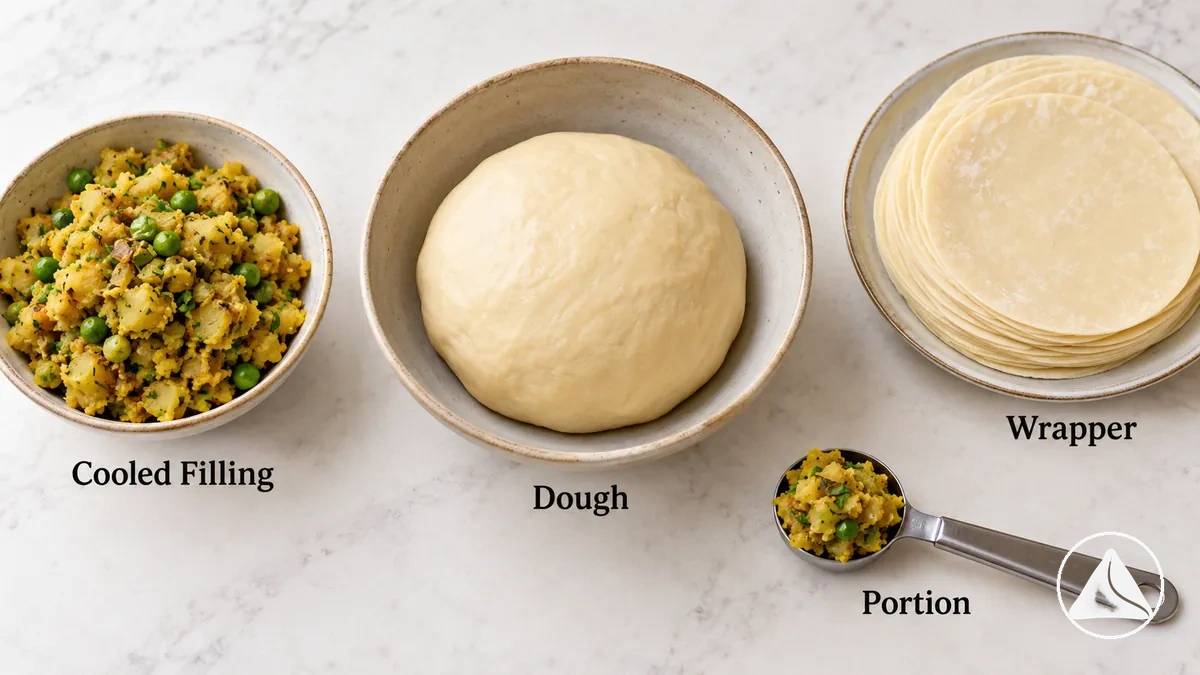
- Dough readiness: The dough should be workable enough to roll and shape without obvious sticking, crumbling, or splitting. If handling already produces these problems, correct the dough condition before assembly because the wrapper may become harder to form or seal.
- Filling temperature: The filling should be cooled rather than noticeably warm when it reaches the wrapper. Proceeding while the filling is still warm can introduce heat and moisture at the wrapper and seam, increasing the chance of handling or sealing problems.
- Filling moisture: The filling should hold together without visible free moisture collecting around it. If the filling is visibly wet, correct the moisture condition before wrapping because excess moisture can soften the wrapper and contribute to leakage.
- Portion control: The filling portion should fit inside the wrapper without forcing the edges apart or placing obvious pressure on the seam. If the wrapper must stretch around the portion, reduce the amount before folding.
- Wrapper readiness: The wrapper should be intact and manageable, without obvious tears, severely uneven areas, or dry edges that resist folding. A damaged or difficult-to-handle wrapper should be corrected or replaced before filling because weak areas can interfere with closure.
Correct a failed check before folding: cool warm filling, cook off obvious excess moisture, reduce a portion that strains the wrapper, and repair or replace torn pastry instead of relying on frying to hide the fault.
Dough Consistency and Handling Mistakes
Samosa dough should be firm enough to hold its shape while remaining workable for rolling, shaping, and sealing.
Dough that becomes excessively soft, sticky, crumbly, or resistant during handling can make the wrapper harder to form evenly and can create weak or difficult-to-seal areas.
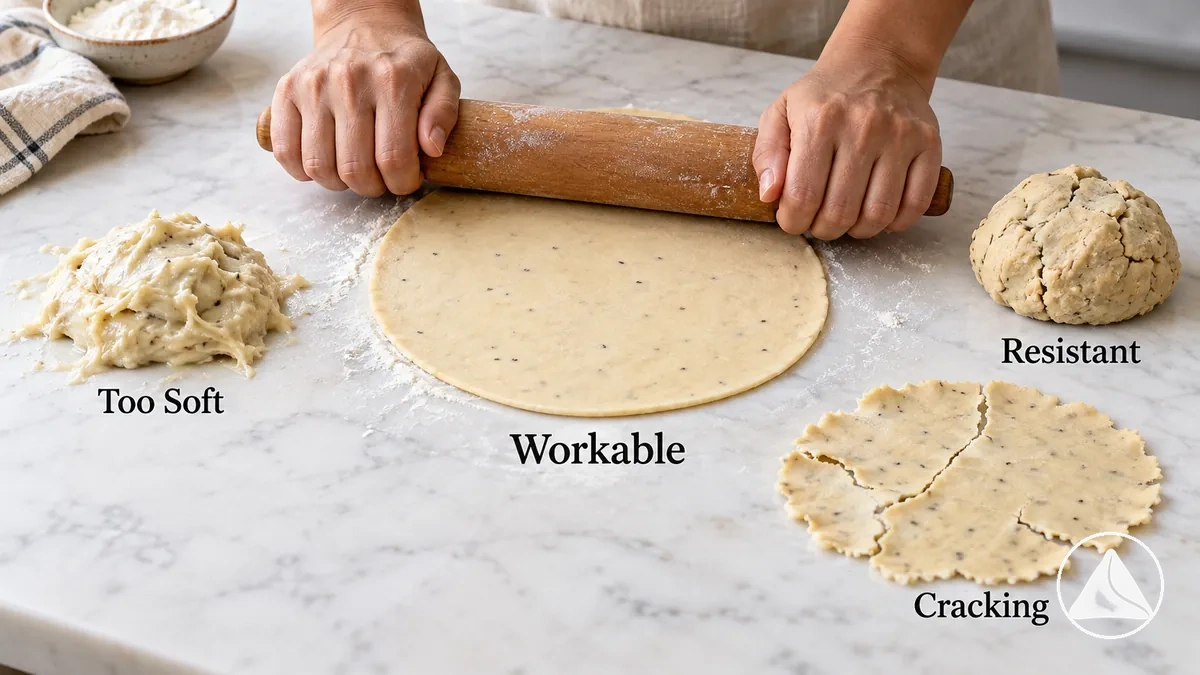
Judge dough consistency by handling behaviour rather than appearance alone: it should roll with manageable resistance and form a wrapper without repeated splitting or excessive sticking. A single visual cue cannot confirm the correct consistency.
The same dough problem may appear as resistance during rolling, difficulty shaping or sealing, or later cracking and breakage.
- Firm and workable: Samosa dough that rolls with manageable resistance, keeps its shape, and forms an even wrapper is in a useful handling state for assembly.
- Too soft or sticky: Dough that clings excessively to the hands or rolling surface can be difficult to shape consistently and may make clean sealing harder.
- Dough becoming more resistant: If repeated handling makes the dough spring back or resist rolling, pause and let it rest covered before deciding whether more kneading is useful. This can reflect handling and rest time, not necessarily overworking alone.
- Uneven rolling or visible splitting: Areas that repeatedly become much thinner, crack, or break during rolling indicate that the dough consistency or handling needs correction before the wrapper is filled.
Cracking or breakage does not, by itself, identify the dough fault. If the dough feels dry and crumbly, work in a little water gradually; if it springs back or becomes resistant, cover and rest it before rolling again. Excessively sticky dough may be easier to handle after a short rest and a light dusting of flour.
Filling Moisture and Cooling Mistakes
Samosa filling should be cooled and relatively dry enough to sit inside the wrapper without releasing obvious moisture or heat against the pastry.
Filling that is still warm or visibly wet can soften the wrapper, place extra stress on the seam, and contribute to later leakage or sogginess.
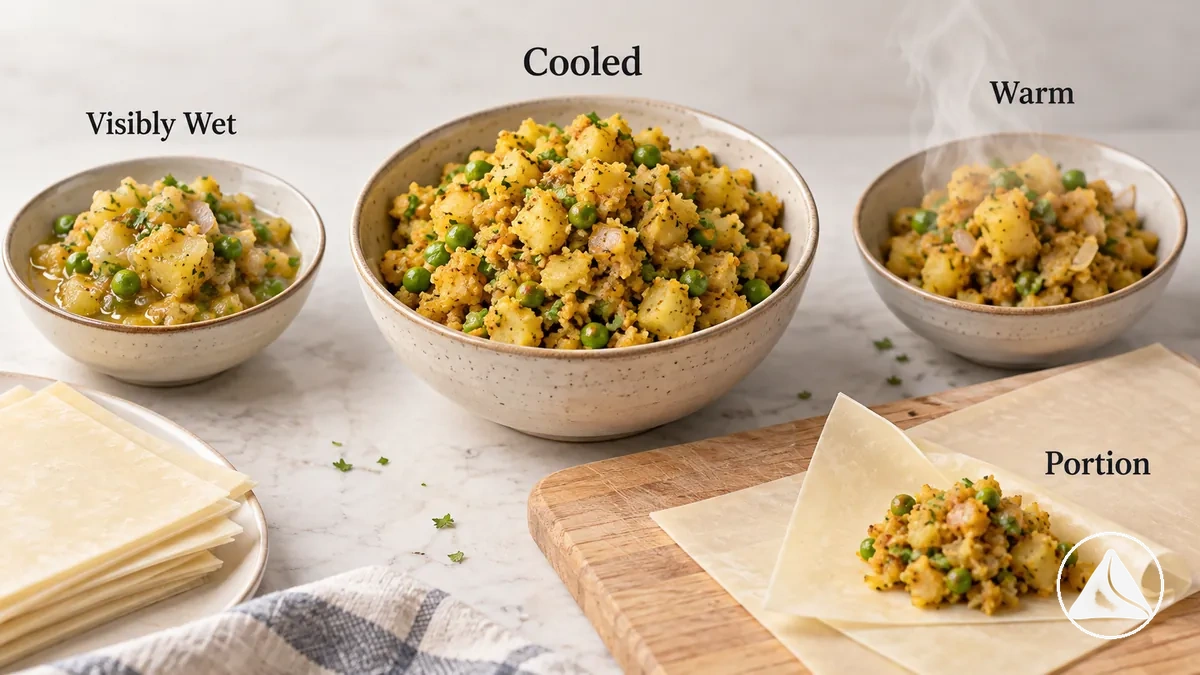
Moisture, temperature, and portion size affect the wrapper through different mechanisms, so no single condition confirms why a finished samosa becomes soggy or leaks.
Correct the filling condition before wrapping: spread hot filling in a shallow dish so steam can escape, and cook away visible free moisture before allowing it to cool. A damp finished pastry does not, on its own, prove that filling moisture was the only cause.
- Moisture: Filling that appears relatively dry and holds together is more manageable for wrapping, while visibly wet filling can transfer excess moisture to the wrapper and make the seam more difficult to keep secure.
- Cooling state: Cooled filling is ready for wrapping when it no longer carries noticeable warmth into the pastry; warm filling can expose the wrapper and seam to additional heat and moisture before frying.
- Portion manageability: The filling portion should fit without forcing the wrapper outward or placing obvious pressure on the seam. An oversized portion can strain the closure and increase the likelihood of leakage during cooking.
Wrap only once the filling is no longer noticeably warm and there is no free liquid collecting around it. If a portion strains the wrapper, reduce it; frying cannot reliably compensate for a wet or overfilled parcel.
Folding and Sealing Mistakes That Weaken the Samosa
Folding and sealing mistakes can reduce a samosa's structural integrity before it reaches the oil.
If the wrapper is uneven, the folds are misaligned, or the seam is poorly closed, the formed parcel may struggle to hold its shape or contain the filling during cooking.
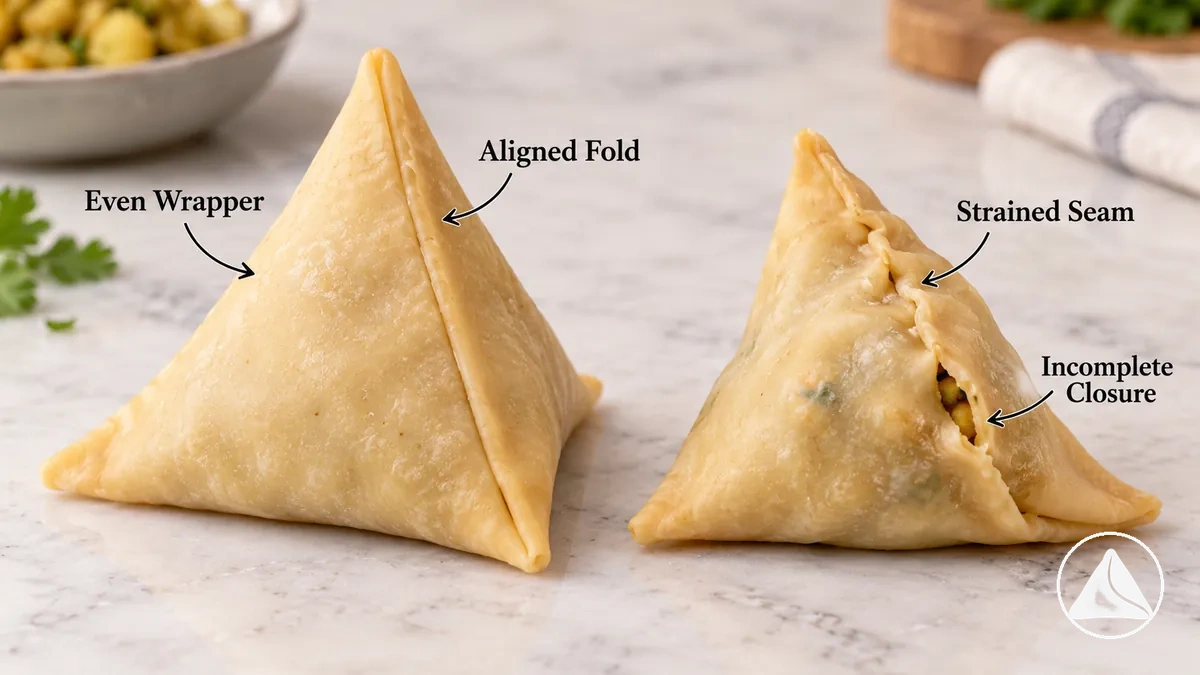
Look for stretched pastry, gaps or misaligned edges before the parcel reaches the oil. These cues help identify possible construction faults, but no single cue proves why a samosa will split or leak.
Wrappers That Are Too Thin or Uneven
A samosa wrapper can be thin without being faulty, but pronounced thin spots or uneven thickness can create local weak areas that may stretch, tear, blister, or cook unevenly once the wrapper is filled and fried.
The practical target is workable, reasonably even pastry, not maximum thinness: a thin wrapper is not automatically defective, but isolated weak spots can matter when the filling is added.
Thickness variation should be assessed separately from the overall dough condition because rolling and dough consistency can both affect wrapper behaviour.
The image compares visible wrapper uniformity so local thin areas can be recognised without treating ordinary variation as a defect.
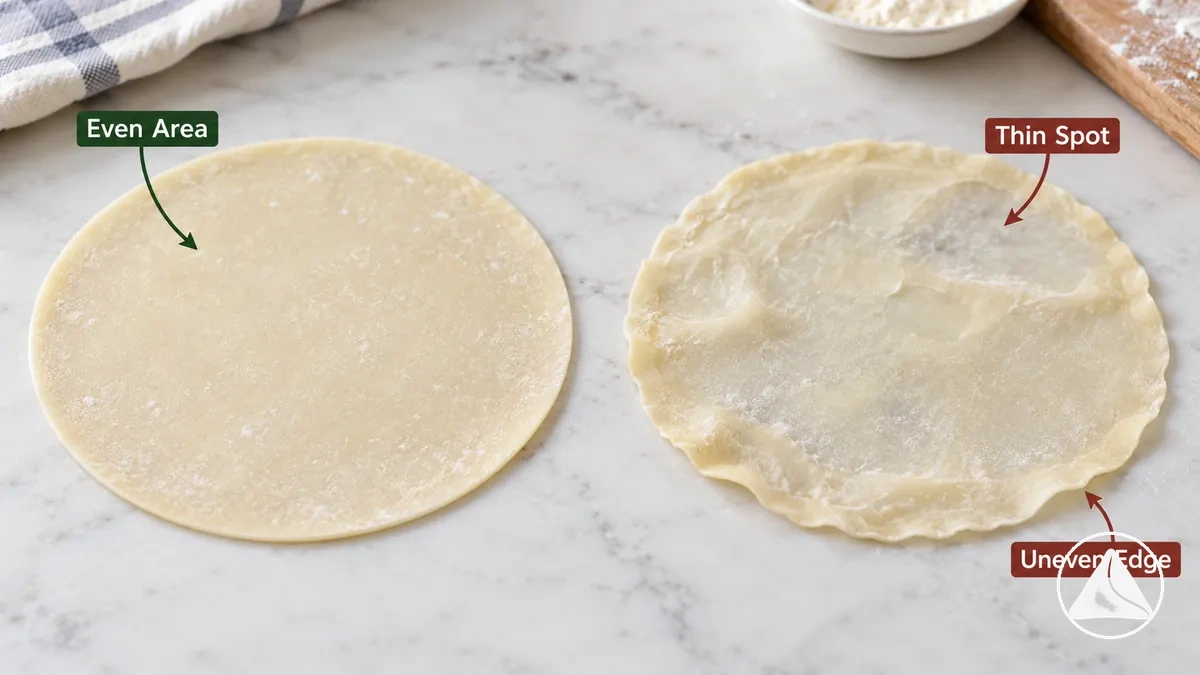
- Pronounced thin spots: A local area that is noticeably thinner than the surrounding wrapper can become a weak point and may stretch or tear more readily when filling places pressure on it.
- Uneven thickness: A wrapper with substantial variation across the same surface may cook less uniformly and can leave some areas more vulnerable to blistering or breakage than others.
- Irregular edges: Edges that vary sharply in thickness or shape can make alignment and closure more difficult, especially where a thin edge must support the seam.
- Reasonably even wrapper: Pastry that remains workable with no obvious weak areas and broadly consistent thickness is better suited to filling and folding than a wrapper with extreme local variation.
Overfilling and Weak Seals
Overfilling can place extra pressure on the samosa wrapper and seam, while an incomplete seal can leave a gap that allows the closure to open or leak during frying.
These are related construction mistakes, but neither one alone proves why a samosa has burst or opened.
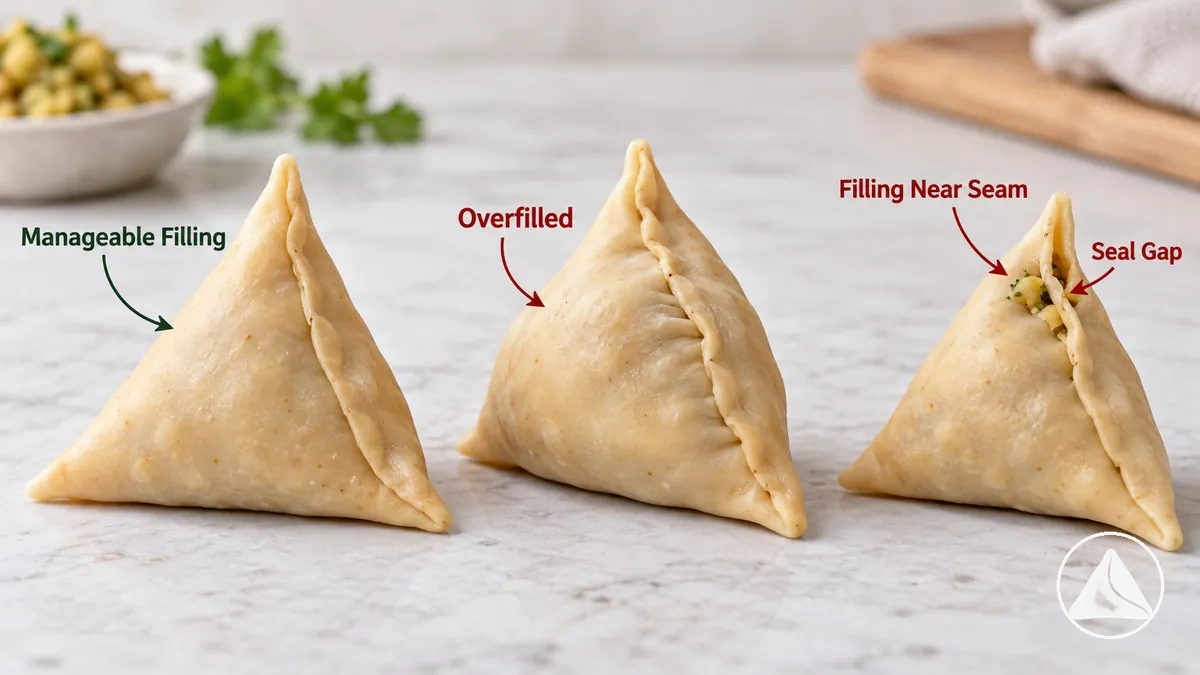
Filling load and seam closure are separate variables that can interact: excess filling may strain the wrapper, filling positioned near the seam can interfere with closure, and an incomplete seal can leave a visible weak point.
An opening during frying can indicate a pre-frying construction problem, but other wrapper, dough, or frying conditions may also contribute.
- Overfilling: A manageable filling load leaves the seam relatively unstressed, while excess filling can push outward against the wrapper and increase pressure at the seam; inspect for stretched pastry or a closure that appears strained before frying.
- Filling near the seam: Filling that reaches the closure area can interfere with a clean seal and leave a gap; inspect the seam for trapped filling or edges that do not meet securely.
- Incomplete closure: A weak or unfinished seal can leave part of the seam visibly open, increasing the possibility of leakage or opening during frying; correct the gap before cooking.
Before frying, keep filling away from the edges and press the seam closed; where the wrapper recipe calls for it, a little flour-and-water paste can help secure the join. If a samosa later opens in the oil, inspect the seam and filling pressure first, then consider dough, wrapper and frying conditions rather than assuming one cause.
Frying Mistakes That Affect Cooking and Texture
Samosa frying conditions influence browning, oil uptake, texture, and how well the wrapper holds together during cooking.
Oil that is too hot, too cool, or poorly controlled can produce different surface and texture problems, so appearance should be interpreted together with the frying condition rather than as proof of one cause.
Oil temperature, frying time, and surface moisture are separate variables that can interact.
Pale and oily samosas suggest a different next heat check from samosas that darken very quickly. Compare the result with the oil behaviour throughout the batch, not colour alone.
There is no reliable fixed frying duration for every samosa: pastry thickness, parcel size and oil heat change how long the wrapper needs to cook through. Use the recipe’s method together with steady browning and crispness to guide the next batch.
Signs That an Earlier Samosa-Making Step Went Wrong
A finished samosa can provide useful signs about which earlier step deserves checking, but a symptom rarely identifies one cause by itself.
Compare the finished crust or seam with dough preparation, filling moisture, wrapper condition, seam pressure and frying heat. The clues below help narrow the next check without treating appearance as proof of one cause.
- Soggy or soft pastry: Check filling moisture, surface moisture, and frying history. The sign suggests that moisture management or frying conditions may need attention, but it does not identify which factor was responsible.
- Oily or greasy surface: Check oil temperature, frying time, and whether the samosa appeared to absorb excess oil during cooking. The interpretation is a possible frying-stage problem rather than confirmation of one temperature mistake.
- Pale or rapidly dark exterior: Check how the oil heat behaved during frying and whether browning developed unusually slowly or quickly. This signal can narrow the next check toward temperature control without treating colour as a complete diagnosis.
- Cracking or blistering: Check the wrapper for thin spots or unevenness, then consider dough condition, handling, and frying history. These visible changes can arise from more than one earlier step.
- Leaking or opening seam: Check the seal, filling pressure near the seam, wrapper condition, and what happened during frying. A visible gap or strained closure supports a construction-related interpretation, but frying conditions can also contribute to the final symptom.
A symptom is not the same as a cause. Use each sign to choose a focused check, then compare it with the steps that actually produced that samosa before adjusting the next batch.