
How to Air Fry Samosas
To air fry samosas, place sealed samosas in a single, uncrowded layer, add a light oil coating if needed, and cook while checking both pastry browning and the filling. For one recipe using six medium, non-frozen samosas, cook at 180°C for 4 minutes and then 200°C for 2 minutes, turning during each stage; this is an example, not a universal setting. Frozen samosas require product-specific timing, and every batch must meet its relevant centre-doneness or filling-safety requirement before serving.
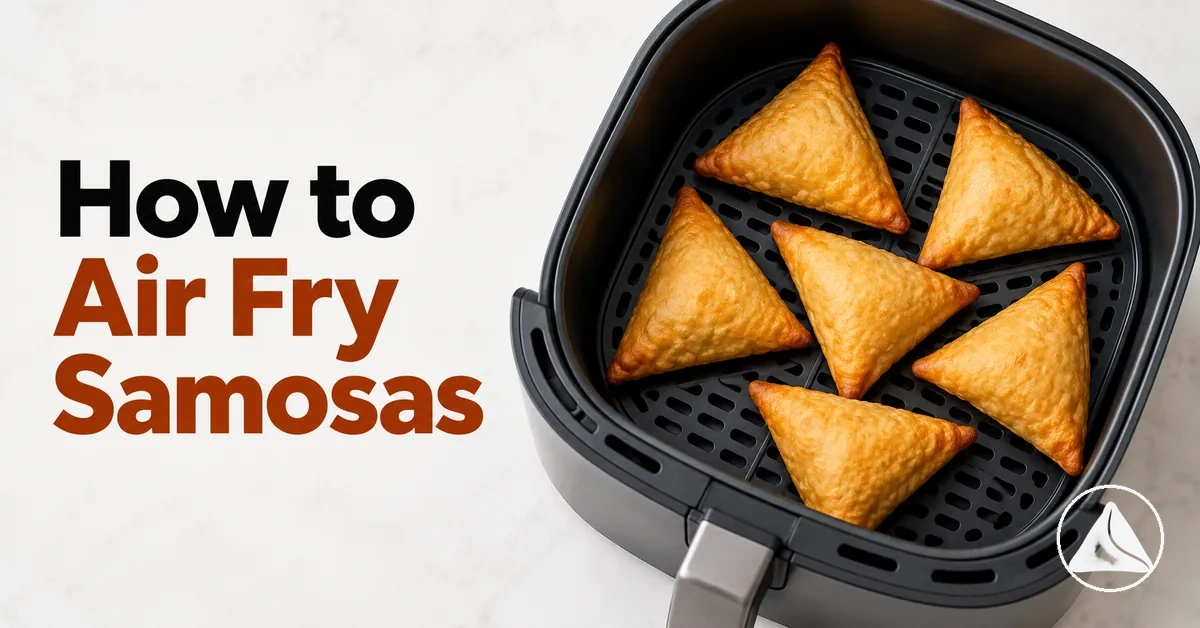
The air-frying pathway
Follow the preparation-to-doneness sequence, then choose starting heat and time according to the samosas you actually have.
- Check the pastrySeal open seams and use a clean, ready basket.
- Coat and spaceUse a light oil sheen if helpful; keep samosas apart in one layer.
- Cook and turnUse a suitable starting setting, watch the colour and turn when one side browns less evenly.
- Verify donenessCheck firm, cooked pastry and centre heating; follow filling-specific safety instructions.
Match the starting condition
Six medium, non-frozen samosas
180°C → 200°C, 6 minutes in total in the Sanjana Feasts example. Turn during both stages; size, filling and appliance can change the result. See the timed stages.
Frozen samosas
Check the packet first. Raw, partly cooked and fully cooked products need different handling; the published examples vary by size and product. Compare frozen examples.
Finish by condition, not the clock: a browned exterior does not prove the centre or a raw filling is safely cooked.
Circulating air heats the exposed pastry, while temperature and time influence surface browning and centre heating. Starting conditions are not fixed finish times: larger or colder samosas may need longer, and pastry type, filling, batch size and air-fryer performance also affect the result.
Oil can support colour and texture without serving as the cooking medium. Prepare the basket before adjusting the heat, and judge the final result using both the pastry and the centre rather than elapsed time or exterior colour alone.
Table of Contents
Prepare Samosas and the Air Fryer Basket for Even Cooking
Start with fully assembled samosas and a clean, ready basket. The first check is whether the pastry can hold its filling and sit securely while hot air circulates.

Before cooking: three readiness checks
- Seams and pastry: Check that each samosa is assembled and closed. Correct open seams, broken pastry or exposed filling before cooking; the air fryer will not seal them.
- Basket surface: Remove preparation debris and keep the surface clean, so the samosas sit securely and the risk of sticking or uneven heating is reduced.
- Space for airflow: Make stable placement and unobstructed circulation possible around the exposed pastry, which can support more even cooking and browning.
Oil treatment and the distance between samosas are adjusted in the next two steps. Once the pastry is ready and the basket is prepared, proceed to the air-frying setup rather than revisiting the broader dough and filling preparation.
Use a Light Oil Coating for Surface Browning
Apply a light oil coating evenly across the samosa surface when oil is appropriate, using it as a surface treatment rather than the cooking medium.
Even oil distribution can support browning and affect pastry texture, while excess oil can leave the surface unnecessarily greasy.

If the pastry already has enough surface fat, extra oil may be unnecessary. Otherwise, brush or spray on a thin, even sheen without pooling; the amount depends on the pastry and samosa size rather than a fixed quantity.
Oil can contribute to surface browning and texture, but it does not guarantee crispness without suitable airflow and cooking conditions.
Arrange Samosas in a Single Layer With Space Between Them
Arrange samosas in one layer with visible gaps so circulating air can reach more of their exposed pastry surfaces; do not stack them.
The image below illustrates useful separation for airflow rather than a fixed measured gap, because the required spacing changes with samosa size and basket geometry.

Overlapping samosas reduce surface exposure to circulating air, while crowding can make cooking and even browning less consistent where surfaces are closely packed or touching.
Leave enough space to avoid overlap and excessive crowding, using the actual basket and samosa dimensions rather than applying one universal distance.
Air Fry Samosas at the Right Time and Temperature
Use air fryer temperature and cooking time as linked starting controls, then judge the samosas by actual browning and doneness rather than treating either value as universal.
Samosa size, filling, starting state, and air-fryer performance can change how quickly the pastry browns and the centre heats.
The image below shows the cooking and monitoring stage rather than a universal setting.

- 180°C · 4 minutesCook for the first stage and turn after 2 minutes.
- 200°C · 2 minutesContinue at the higher temperature and turn after 1 minute of this stage.
This 6-minute sequence is the Sanjana Feasts recipe example, not a validated setting for every samosa. Adjust for filling, size, starting temperature, batch size and the air fryer's heat distribution.
- Set a starting temperature and cooking duration appropriate to the samosas being cooked; for samosas matching the Sanjana Feasts example, begin at 180°C.
- Begin cooking and treat the planned cooking time as a monitoring interval rather than an automatic finish point.
- Monitor browning as cooking progresses and compare surface colour with the remaining doneness of the samosas.
- Turn the samosas when appropriate so different pastry surfaces receive exposure to circulating heat.
- Assess doneness before removal by checking that the pastry is cooked through and the centre is heated through, not merely that the surface is browned.
- Adjust or finish according to the observed result: extend cooking when the samosas still need heating, reduce or avoid increasing the heat if browning is advancing too quickly, or finish early when satisfactory browning and doneness are reached.
Browning is a surface signal, so it should be monitored alongside centre heating rather than used as the sole confirmation of doneness.
If the surface darkens before the centre heats through, reducing the heat can limit further browning while cooking continues. If the samosas remain pale and uncooked, extend the cooking time and check again.
Verification of both browning and doneness should determine when cooking ends.
Air-fryer settings should not be copied directly from baking or deep-frying instructions because those methods use different heating conditions.
Previously cooked samosas also require reheating guidance rather than the initial-cooking settings used here.
Turn Samosas Halfway Through Cooking
Reorienting samosas exposes different pastry surfaces to moving air and can support more even browning, particularly when an irregular shape or the basket's airflow leaves one side less browned.
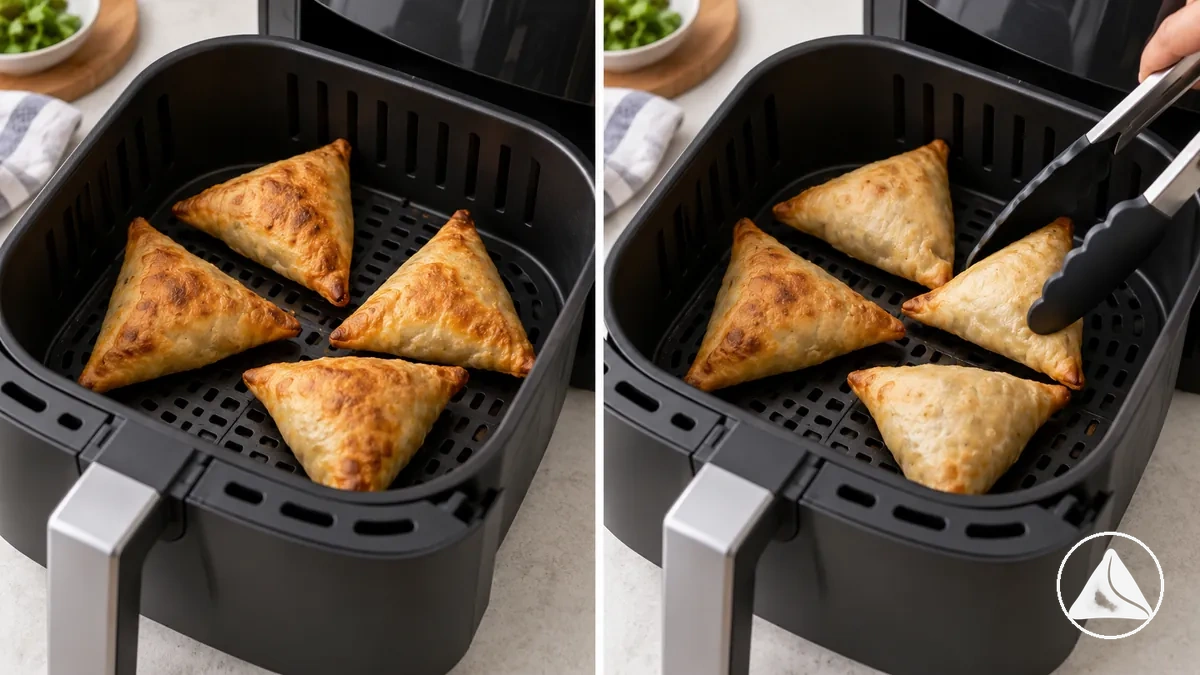
Decide whether to turn by looking at the pastry
- One side looks paler
- Flip, rotate or reposition around the halfway point to expose that side to the hot air.
- Both sides brown evenly
- A halfway turn may be unnecessary if the air fryer is already heating the exposed surfaces consistently.
- The basket is crowded
- Turning alone cannot overcome severe crowding or unsuitable heat settings; correct the underlying conditions and check again.
Check Doneness Before Removing the Samosas
Check samosa doneness using several signs rather than relying on cooking time or browning alone.
A browned, crisp-looking exterior and firm pastry are useful visible cues, but surface colour alone cannot confirm that the centre is adequately heated or that a raw filling is safely cooked.

Verification should combine exterior readiness with the internal state of the samosas.
If any required sign is not met, continue cooking and check again; remove the samosas only when the relevant exterior and centre-heating criteria align.
- Browning: The pastry surface should show the intended cooked colour rather than remaining visibly pale or undercooked.
- Crispness and pastry firmness: The exterior should appear set and firm instead of soft or dough-like.
- Centre heating: Check that the centre is heated through; exterior colour alone does not confirm the internal state.
- Filling-specific verification: For raw meat or poultry fillings, use a food thermometer and follow an appropriate safe internal-temperature requirement for the filling. For packaged samosas, follow any stated cooking and safety directions; do not judge safety from appearance alone.
Adjust Air-Frying Time and Temperature for Frozen Samosas
Frozen samosas begin from a colder starting state than chilled or freshly prepared samosas, so the centre can take longer to heat even while the pastry begins browning.
Adjust cooking time, temperature, and the point at which doneness is checked according to the product rather than applying one universal frozen setting.
Published frozen-samosa recipes use different starting conditions for different products. These examples are not interchangeable with each other or with the packet directions for another type of samosa.
| Samosa and recipe | Temperature | Cooking time |
|---|---|---|
| Size-dependent samosas · Sandhya's Kitchen | 180°C | About 5–10 minutes |
| Large Punjabi samosas · Sandhya's Kitchen | 180°C | About 10–11 minutes |
| Trader Joe's mini vegetable samosas · Watch Learn Eat | 195°C | 9–11 minutes |
Use these timings only as the specific recipes' examples. Package instructions and whether the filling is raw, partly cooked or fully cooked take priority when they require different handling or doneness checks.
- Product state: Check whether the samosas are raw, partly cooked or fully cooked. Raw and partly cooked fillings need safe cooking through; fully cooked products need reheating as directed. Their times are not necessarily interchangeable.
- Size: Larger samosas can require more time for the centre to heat through than smaller samosas under otherwise similar air-fryer conditions.
- Surface moisture: Visible ice or moisture can affect surface drying and the browning rate, so monitor the pastry rather than relying only on elapsed time.
- Package guidance: Do not automatically thaw frozen samosas; follow the packet when it specifies cooking from frozen, thawing first or using a particular temperature or doneness criterion.
- Air-fryer performance: Heat distribution and appliance performance can change how quickly browning develops, so adjust the remaining cooking time according to observed progress.
A frozen samosa may therefore need a different cooking adjustment from a chilled or freshly prepared one because centre heating and surface browning can progress on different timelines.
Continue or adjust the cook until the pastry and centre meet the relevant doneness criteria, using package guidance where it provides a specific verification requirement.