
How to Bake Samosas
For medium, freshly assembled samosas with a fully cooked filling, preheat the oven to around 200°C conventional (180°C fan-forced), space the samosas on a tray, brush lightly with oil or ghee, and bake until golden and crisp. Allow roughly 20–30 minutes as a starting estimate, begin checking after about 15–20 minutes, and ensure the centre is thoroughly heated; follow your recipe if it specifies different settings.
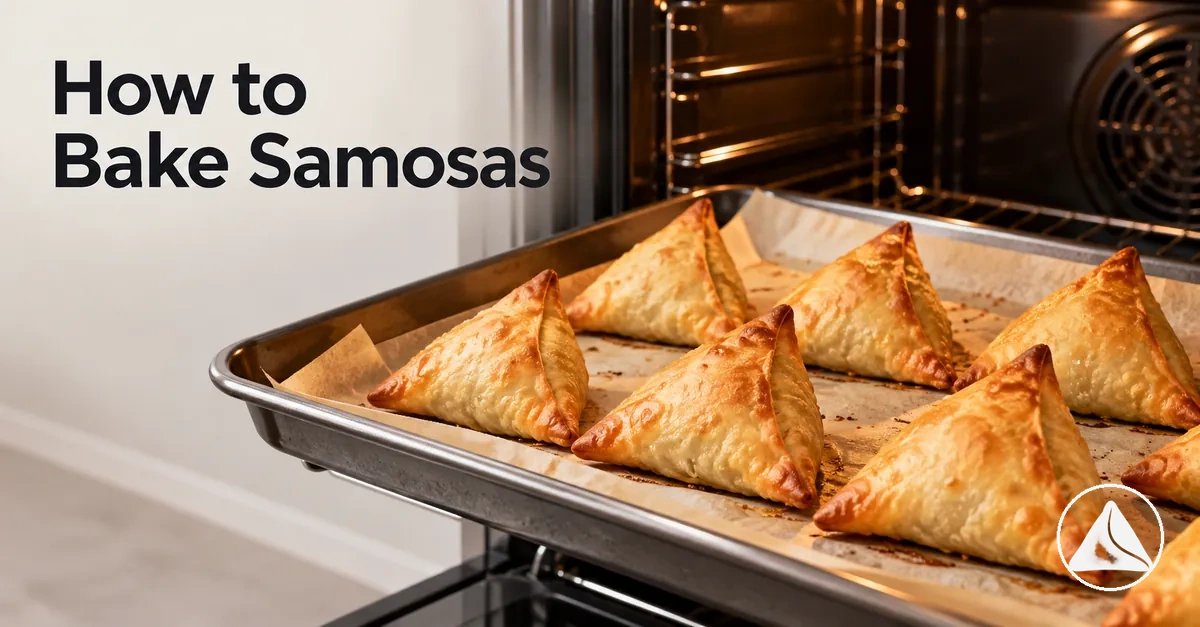
Oven method · quick reference
The samosa baking plan
A practical sequence for medium samosas with a cooked filling. These settings are a starting point, not a guaranteed result; the recipe and the pastry type take priority.
- Conventional oven
- 200°C
- Fan-forced oven
- 180°C
- Starting time estimate
- 20–30 min
- Preheat and space
Preheat fully, then set the samosas apart in a single layer on a baking tray.
- Lightly coat
Brush the exposed pastry with a thin, even layer of oil or ghee—no pooling.
- Bake and observe
Start checking the pastry from about 15–20 minutes; look for developing, even golden colour.
- Adjust and verify
Turn only if the sides brown unevenly. Finish when the pastry is crisp and the centre is thoroughly heated.
What changes if the samosas start cold?
- Chilled
- Allow for additional centre-heating time compared with otherwise similar room-temperature samosas; check the filling.
- Frozen
- Follow the packet or recipe instructions for baking from frozen. Extra heating time is often needed; a golden shell alone is not a final check.
Check doneness, not just the clock: time changes with size, pastry thickness, filling and oven behaviour. If a filling contains raw meat or poultry, verify that it reaches a food-safe cooked temperature for that ingredient.
The method below explains how to prepare the tray, manage browning and check the centre—including the adjustments needed for frozen samosas.
Table of Contents
Prepare Samosas for Baking
Prepare samosas for baking by preheating the oven, setting up the baking tray, and arranging the samosas in a single layer with spacing between them.
These steps establish stable heat and expose the pastry more evenly before baking begins.
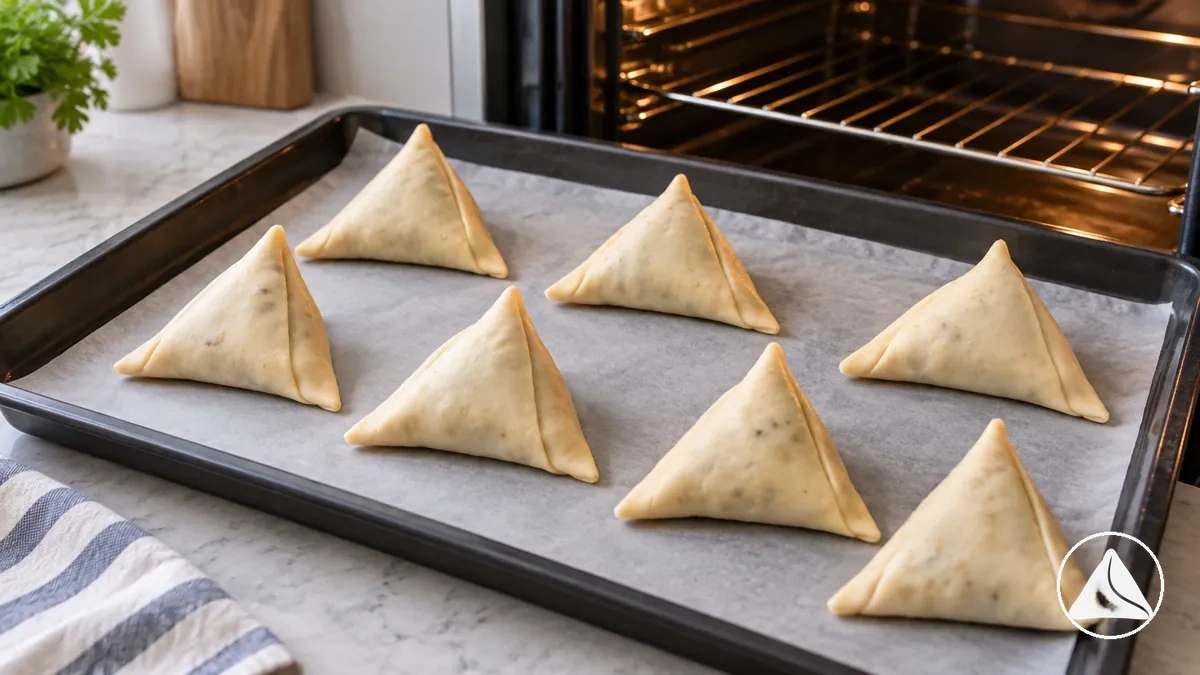
- Preheat the oven. Bring the oven to the baking setting you intend to use before placing the samosas inside.
- Prepare the baking surface. Set up a baking tray suitable for the oven; use a lining only when it suits the tray or recipe.
- Arrange the samosas. Place them in a single layer so the pastry surfaces are not covered by other samosas.
- Leave spacing between them. Keep visible gaps rather than crowding the tray so heat can circulate around more of each samosa.
- Position the tray for baking. Place it in the oven according to the setup that suits the oven rather than treating one rack position as mandatory.
Brush Samosas with Oil or Ghee Before Baking
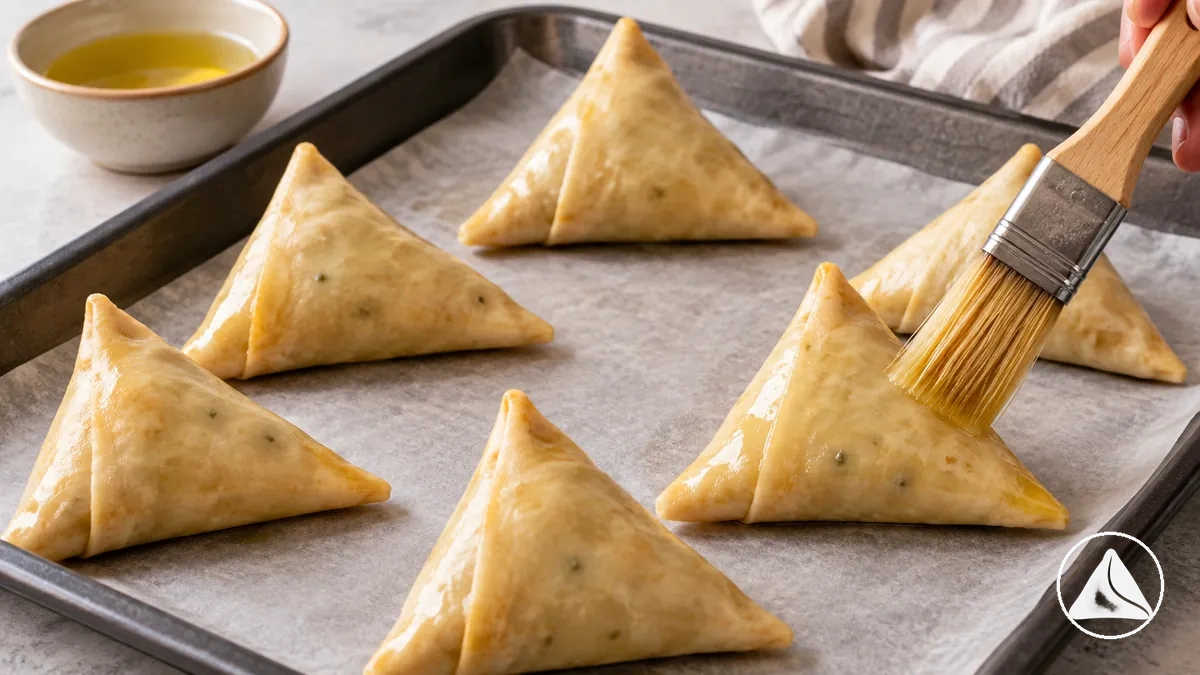
Brush the samosa pastry surface with a light coating of oil or ghee before baking.
Even coverage can support more uniform browning and crispness across the exposed pastry without requiring a heavy layer.
Set the Oven Temperature and Baking Time
Oven temperature and baking time for samosas must be considered together because changing the heat changes how quickly the pastry browns and cooks through.
For medium, freshly assembled samosas with a fully cooked filling, 200°C in a conventional oven or 180°C in a fan-forced oven is a useful starting setting. Allow roughly 20–30 minutes, begin checking around 15–20 minutes, and follow any different temperature or timing specified by the recipe; smaller, larger, thicker or frozen samosas may need a different schedule.
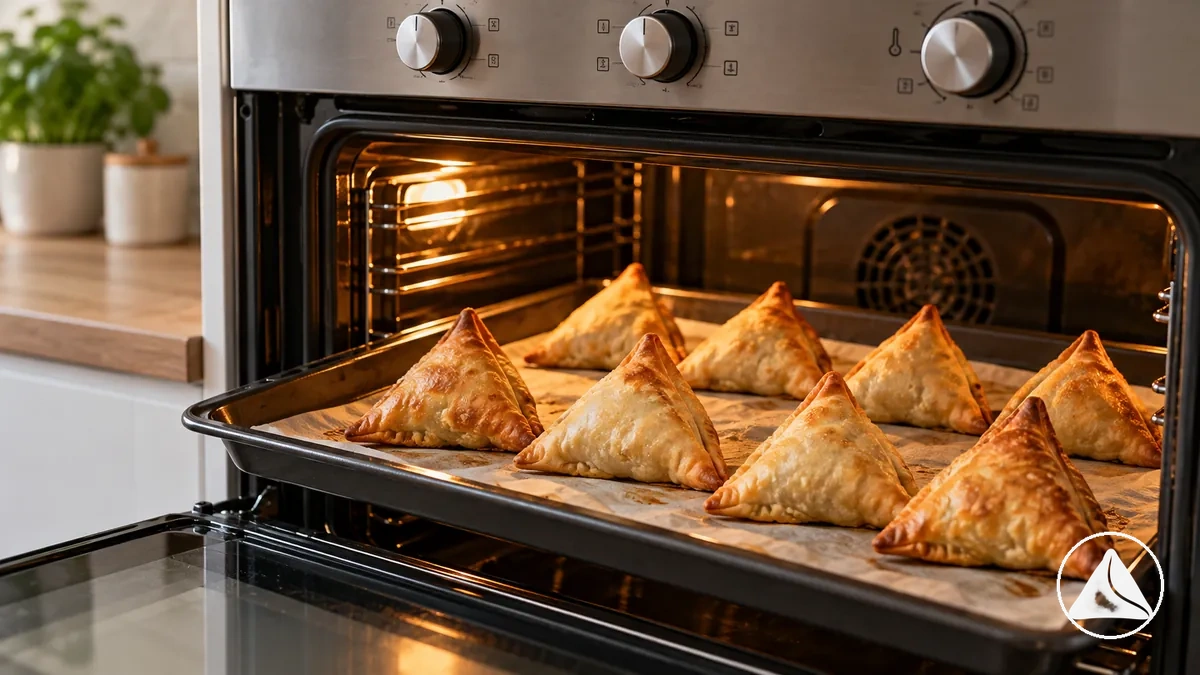
A higher oven temperature can shorten the required baking time while accelerating surface browning, whereas a lower setting generally requires longer baking under otherwise comparable conditions.
The starting estimate also changes with the size, pastry thickness, and starting temperature of the samosas.
Oven behaviour matters because heat distribution and temperature recovery can differ between ovens, so these conditions should guide the initial timing estimate:
- Size: larger samosas generally need more time for heat to reach the centre than smaller ones under comparable conditions.
- Pastry thickness: thicker pastry generally requires more baking time than thinner pastry at the same oven setting.
- Starting temperature: chilled or frozen samosas begin colder than room-temperature samosas, so their baking time should be assessed separately rather than assumed to be identical.
- Oven behaviour: heat distribution, temperature recovery, and door opening can change how quickly browning and internal heating progress.
- Desired browning: surface colour provides a visible cue for when to begin checking rather than relying only on the scheduled baking time.
Begin checking before the expected end of the recipe's baking time once the pastry is developing an even browned surface.
Continue baking only as needed until the samosas show the required browning and other recipe-specific doneness cues, rather than treating one exact minute as universally correct.
Bake Samosas for Even Browning and Crispness
Bake the samosas while monitoring the pastry for increasingly even browning and surface crispness.
Sustained heat exposure allows moisture to leave the pastry surface as colour and texture develop, although the rate can vary with pastry type, surface fat, moisture, and oven behaviour.
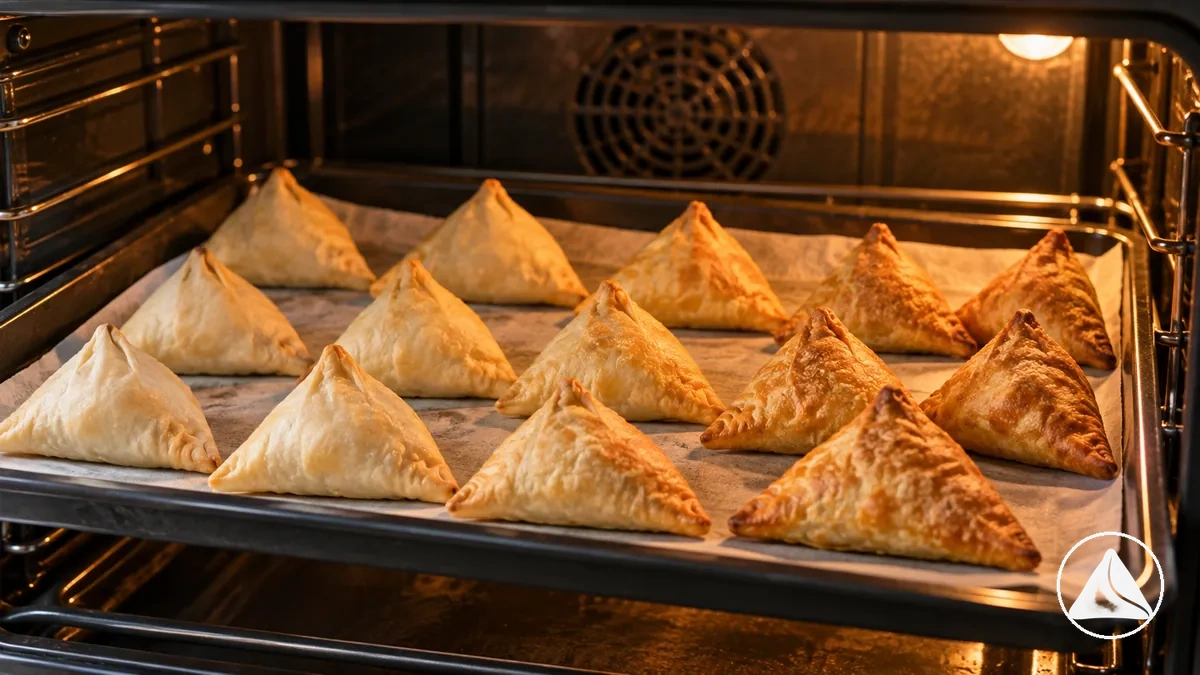
- Start the bake. Place the prepared tray in the oven so the samosas receive sustained heat exposure and the pastry can begin cooking and drying at the surface.
- Let the surface develop. Keep the samosas baking while the pastry firms and surface moisture decreases, supporting crispness as browning progresses.
- Monitor the colour. Check the exposed pastry as it changes from pale toward golden or browned, using visible surface development rather than elapsed time alone as the main progress signal.
- Respond to uneven browning. If the back or one side of the tray darkens faster, carefully rotate the tray to redistribute exposure. If individual samosas brown unevenly from top to bottom, check whether turning them would help.
- Continue the bake. Keep baking while the samosas develop an evenly browned, dry-looking surface, allowing for differences in pastry, moisture, surface fat, and oven behaviour.
Baked crispness does not need to reproduce deep-fried texture exactly; the useful target is the surface development produced by the oven method.
Use colour and texture changes to guide adjustments during baking, then apply the separate doneness criteria before considering the samosas finished.
Turn Samosas During Baking for Even Browning
Turn samosas during baking when the tray-contact side is browning differently from the exposed side; turning can improve even browning, but it is not required in every oven setup.
The decision should come from visible colour differences and heat exposure rather than from one fixed turning minute.
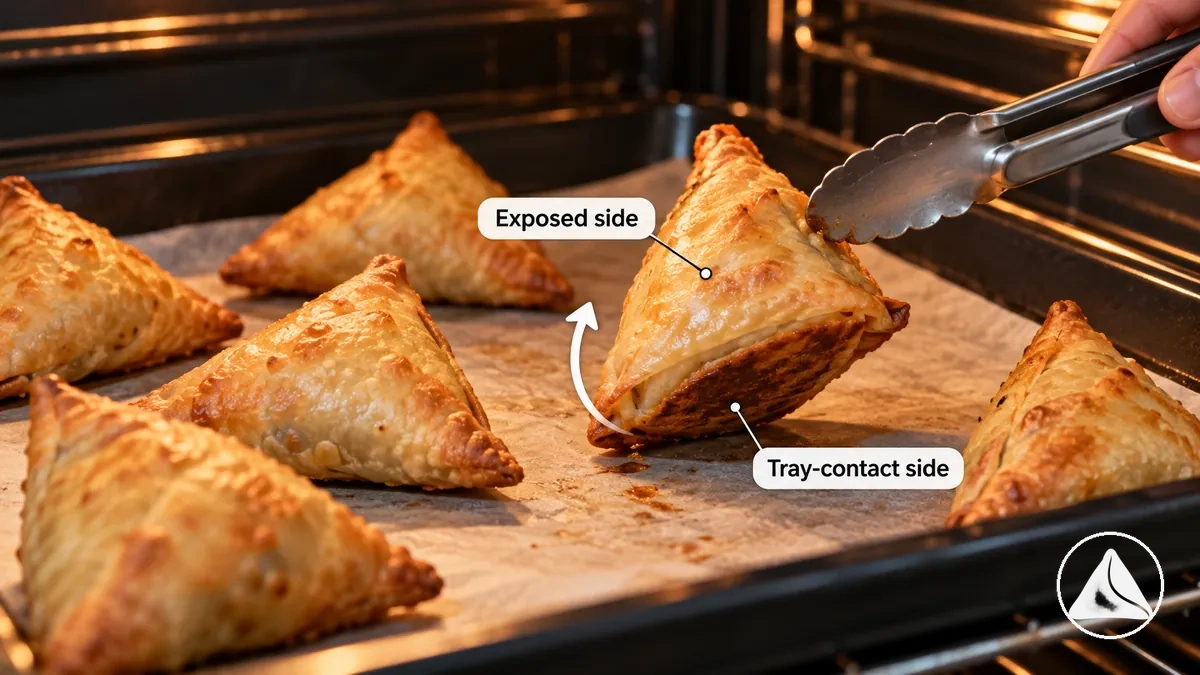
Tray contact can make the underside develop differently from the exposed pastry, while airflow and oven behaviour can change how evenly heat reaches each surface.
- Turn when browning is uneven. If one side is noticeably darker or developing faster than the other, turn the samosas so the less-browned surface receives a different heat exposure.
- Leave them in position when browning is even. If the tray-contact and exposed sides are developing at a similar rate, turning may be unnecessary.
Adjust the Bake for Frozen Samosas
Frozen samosas enter the oven at a lower starting temperature, so heating through can take longer than for otherwise similar unfrozen samosas.
Their baking time and checking points may therefore need adjustment while the normal goals of controlled browning and thorough centre heating remain the same.
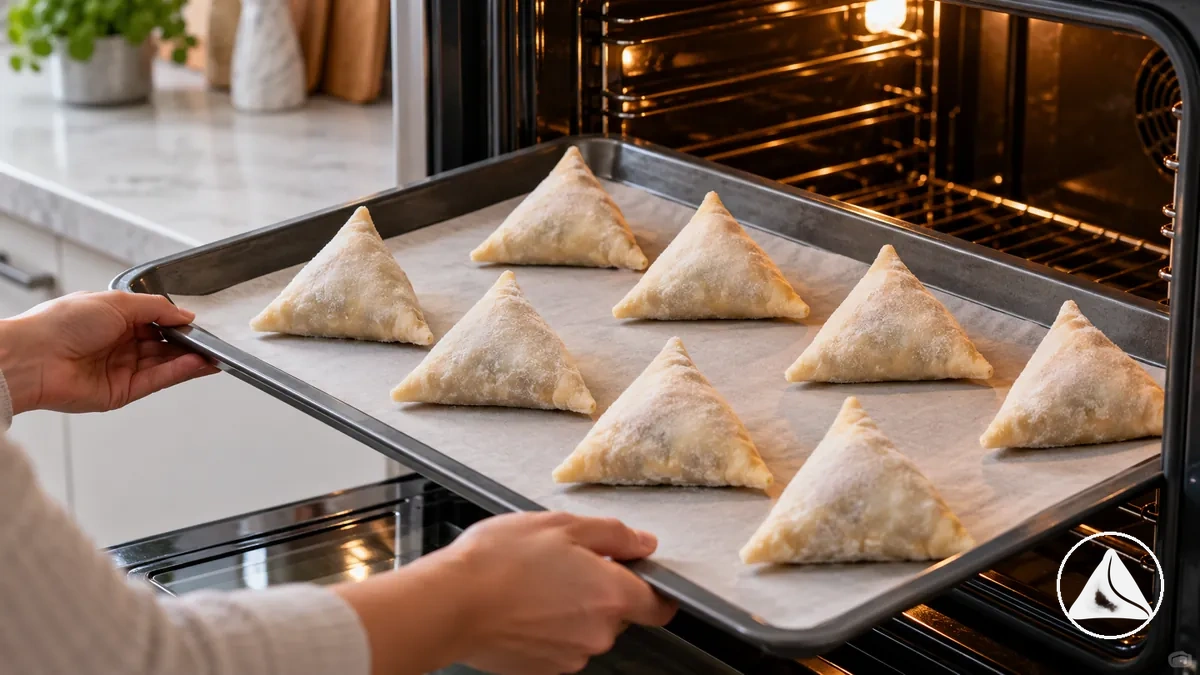
- Start from the specified frozen state. Bake the samosas from frozen when the recipe or product instructions call for it; do not assume thawing is required for every preparation.
- Allow for a longer heating phase. Expect the colder starting temperature to affect baking time, but do not add one fixed number of minutes to every batch.
- Monitor surface browning. Check the pastry as colour develops so the exterior does not become excessively browned while the centre is still heating through.
- Check heating progress before finishing. Continue baking when the surface has browned but the centre still needs further heating, using preparation-specific doneness guidance where available.
Follow the frozen-product instructions when provided; otherwise, judge whether more oven time is needed from both exterior browning and progress towards a thoroughly heated centre.
Check When Baked Samosas Are Done
Doneness for baked samosas is verified when several observable cues align rather than when one baking time is reached.
Check the browned pastry, surface texture, edges and seams, and centre heating together.
Golden pastry is not proof of a hot filling. Judge the crisp surface, set edges and seams, and centre heating as separate parts of the doneness check.
- Check the browned pastry. Look for reasonably even browning across the exposed pastry rather than relying on one dark patch as proof of doneness.
- Check the surface texture. The pastry should feel crisp or firm rather than soft and damp at the surface.
- Check the edges. The edges should appear set and structurally firm rather than soft or visibly underbaked.
- Check the seams. Sealed seams should look set and baked rather than pale, soft, or doughy.
- Check the centre. Verify that the samosa is adequately heated through at the centre instead of assuming a browned exterior means the interior is ready.