
Why Samosa Dough Cracks
Samosa dough cracks when it cannot flex under rolling or folding stress. Common contributors are dough that is too dry or stiff, insufficient covered resting, surface drying, and uneven thickness or excessive handling pressure. Check when the first crack appears and whether the dough is cohesive inside before resting, covering, adjusting pressure, or adding moisture gradually to genuinely crumbly dough.
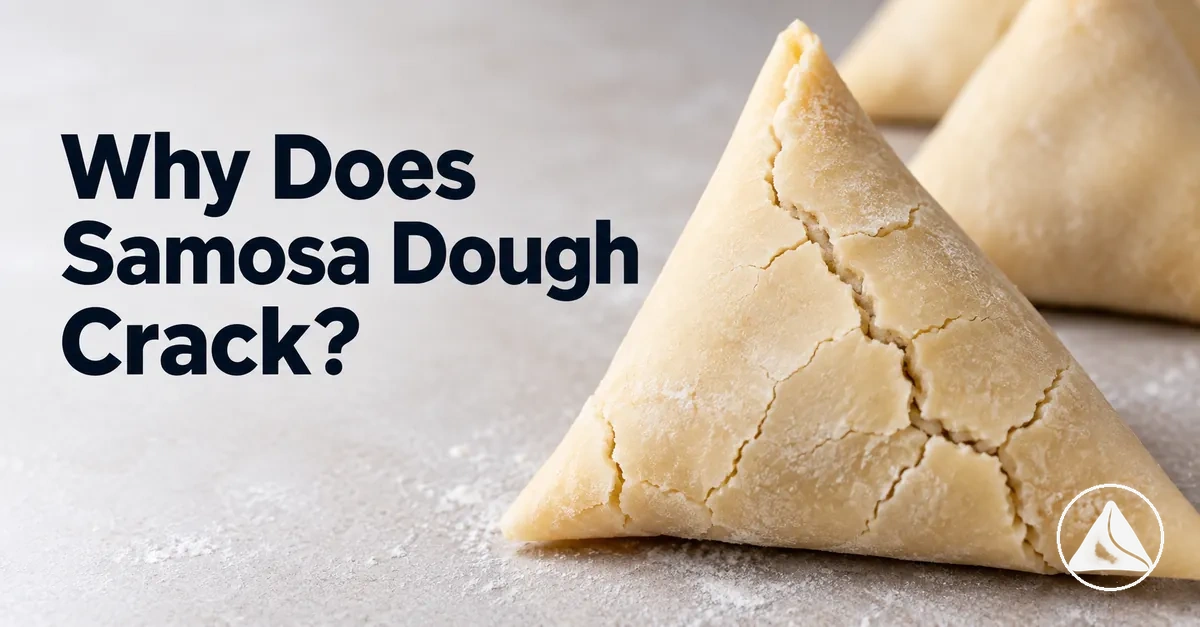
CRACK PATTERN GUIDE
What does your dough’s first crack suggest?
Choose the closest observation to see a possible contributor, a distinguishing check and a first adjustment. Different causes can overlap.
It cracks while rolling
- Possible contributors
- Strong resistance across the sheet suggests excessive firmness or insufficient relaxation; cracks at thin spots or pressed edges also implicate handling stress.
- Check next
- See whether the whole piece resists flattening or only heavily pressed, uneven areas split.
- First adjustment
- Rest resistant dough covered, then roll a small test piece gently and evenly. Ease pressure at thin edges rather than adding water without a texture clue.
Use this as a troubleshooting guide, not a certain diagnosis. Test a small piece after each adjustment before changing the whole batch.
Start with the dough’s texture and the moment cracking begins: crumbling throughout is different from a dry outer layer, and resistance during rolling differs from a fracture that first appears at a fold.
Table of Contents
The Main Causes of Cracked Samosa Dough
Cracked samosa dough can result from three main causal classes: dough condition, resting or surface exposure, and shaping stress, each affecting flexibility or stress tolerance differently.
The image illustrates dry edges and stressed thin areas during shaping, although these visible signs cannot confirm the underlying cause on their own.
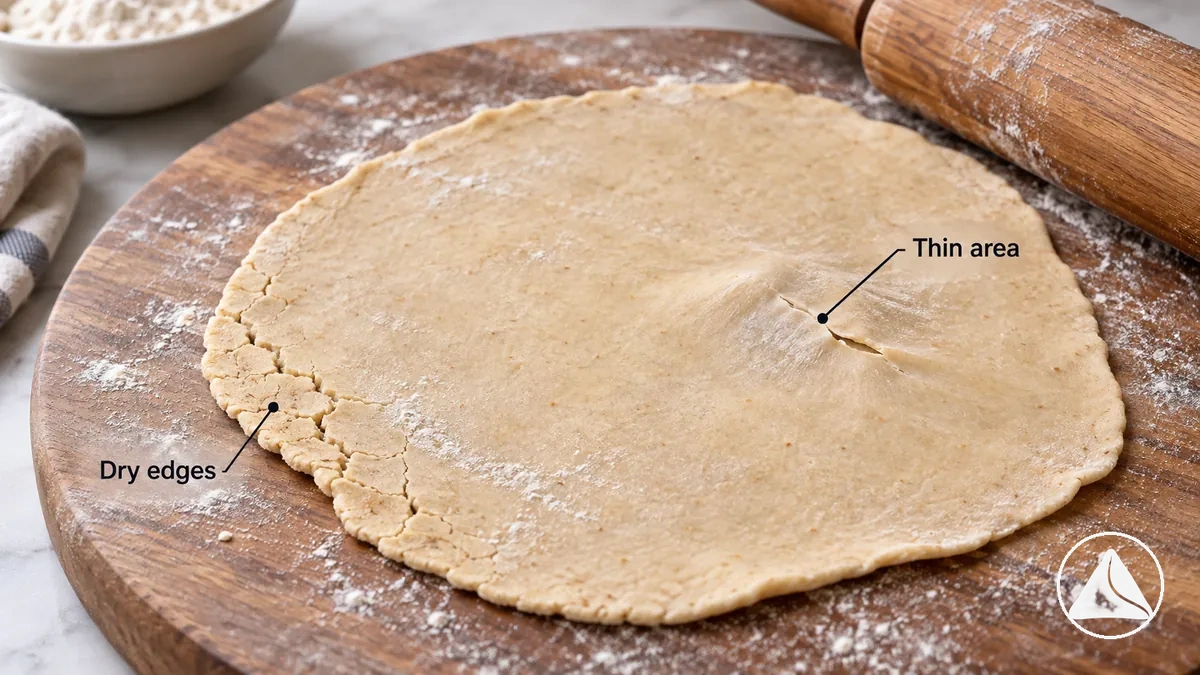
- Moisture and firmness: Insufficient effective moisture or excessive firmness can make samosa dough dry, stiff, and less flexible, increasing the likelihood of cracking when the pastry bends or stretches.
- Inadequate resting: Samosa dough shaped before it has relaxed sufficiently may resist rolling or folding, increasing stress on the pastry and contributing to splits.
- Surface drying: Uncovered dough can lose moisture from its exposed surface, creating a less flexible outer layer that may crack during shaping even when the interior remains cohesive.
- Thickness and handling pressure: Uneven thickness or excessively thin areas can concentrate stress in the pastry, while forceful rolling or folding may trigger cracking where the dough is already vulnerable.
These causes can overlap.
For example, dough that is already excessively firm may become more vulnerable to cracking after its surface dries during exposure.
Moisture imbalance or inadequate resting may be an underlying condition, while handling pressure acts as a contributing factor or immediate trigger.
Cracking that begins during rolling rather than folding can help distinguish the more plausible conditions, although the cracking stage alone does not establish the exact cause.
Moisture and Dough Firmness
Samosa dough is typically firmer than soft bread dough, but it should remain cohesive and flexible enough to bend without splitting.
When moisture is insufficient for the flour and recipe, or firmness becomes excessive, the dough loses workability and becomes more vulnerable to cracking during shaping.
The image compares dry, cracked dough with firm, cohesive dough to illustrate texture differences rather than universal water requirements.
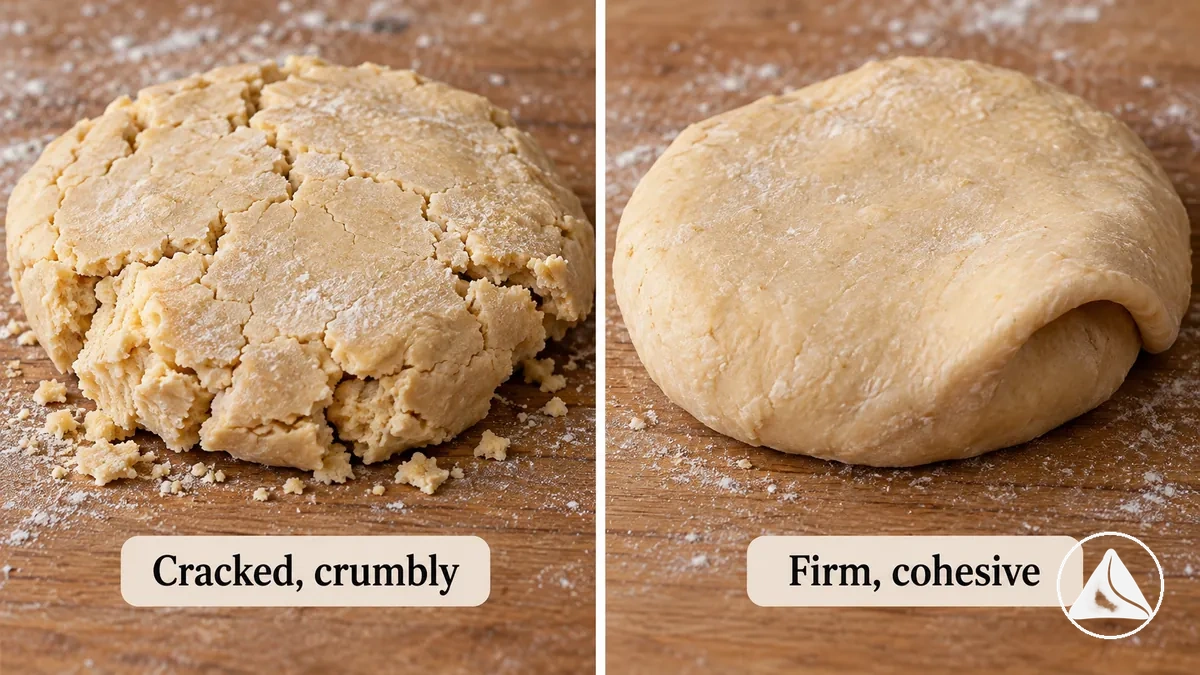
- Dry or crumbly: Samosa dough with insufficient effective moisture may break apart at the edges or develop small cracks when pressed, indicating limited cohesion and flexibility.
- Overly stiff: Dough that holds together but strongly resists flattening may experience excessive stress during rolling, contributing to edge cracking or splitting when bent.
- Firm but cohesive: Workable samosa dough holds its shape, remains joined when pressed, and bends during folding without readily cracking. Firmness alone does not indicate a moisture problem.
- Overly sticky: Dough with more available moisture than its flour and formulation can comfortably handle may cling to hands or the rolling surface, making shaping difficult and increasing the risk of stretching or tearing.
During rolling, dry or excessively stiff samosa dough may resist the rolling pin and develop edge cracking, while limited flexibility can produce splits where the pastry bends during folding.
A crumbly surface, strong resistance to flattening, or cracking under moderate pressure suggests poor workability, but these signs do not establish moisture deficiency as the sole cause.
Flour absorption, recipe composition, and environmental conditions influence the workable consistency, so tactile and visible dough characteristics are more useful than assuming that additional water is necessary.
Resting and Surface Drying
Resting samosa dough while covered allows tension to relax and can make rolling and folding easier. Leaving dough exposed during resting or waiting can dry the surface even when the original mixture was workable.
For many small home batches, about 20–30 minutes of covered rest is a useful starting point, not a universal requirement. Judge readiness by whether a small piece rolls with less resistance and without fresh edge cracks; the flour and recipe can change the time needed.
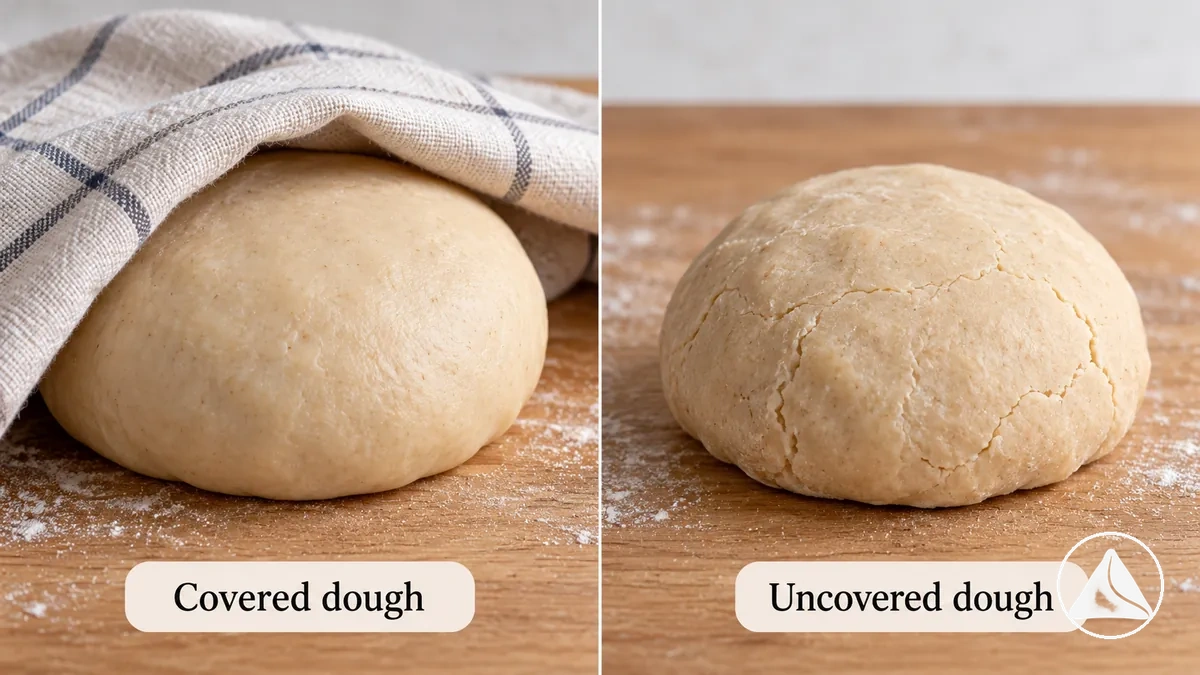
- Covered during resting
- The surface retains moisture as tension relaxes, helping the pastry stay pliable for rolling and folding.
- Left uncovered
- Exposure, especially to dry or moving air, can leave a less flexible outer layer that may split during shaping even if the interior is cohesive.
In practice: Keep unused portions covered while shaping other pieces. When cracks appear after exposure, compare the exterior with the interior before assuming the dough was mixed incorrectly.
Rolling Thickness and Handling Stress
Uneven thickness in rolled samosa pastry can concentrate shaping stress in weaker areas, making thin spots more vulnerable to cracking or tearing.
When the pastry is rolled excessively thin, it has less material to withstand stretching or bending, especially if the dough already has limited flexibility.
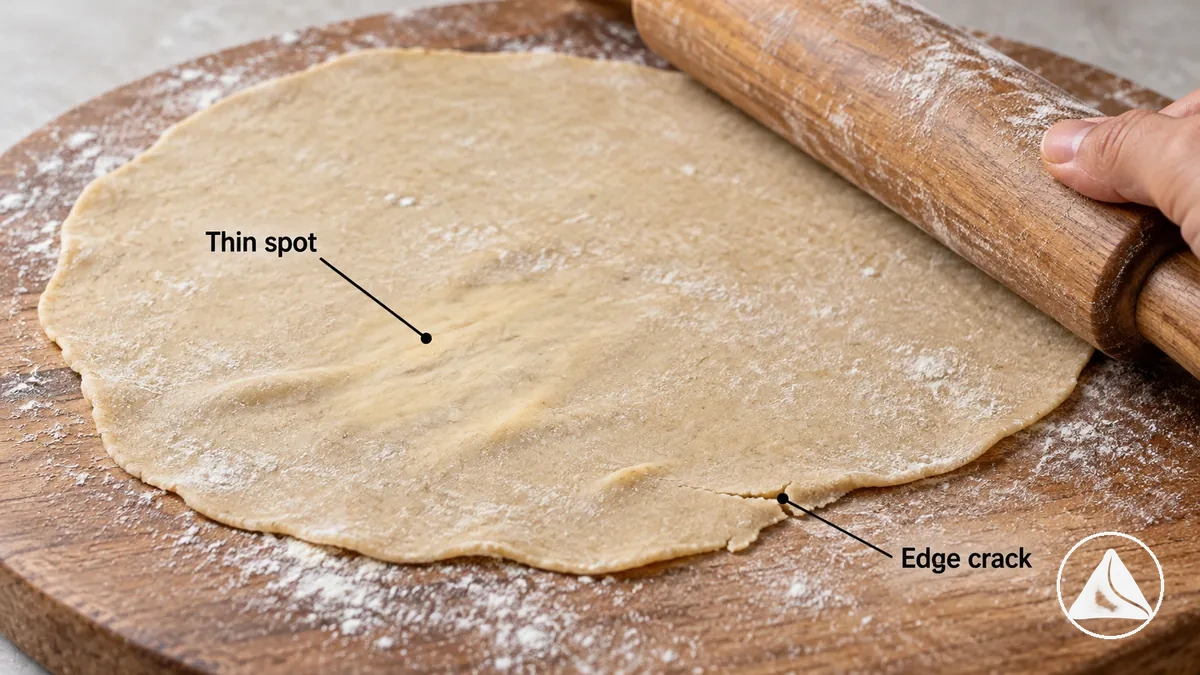
The risk therefore depends on the relationship between thickness, rolling pressure, and dough condition: samosa pastry needs enough flexibility to withstand shaping without being stretched or thinned beyond its tolerance.
How to Diagnose the Cause of Dough Cracking
To diagnose cracked samosa dough, examine its texture before shaping and identify when cracking first appears: before rolling, under rolling pressure, or during folding.
The image highlights visible surface and edge signals, while the diagnostic table connects each signal to a possible cause, a differentiating check, and an interpretation that helps determine the next corrective direction.
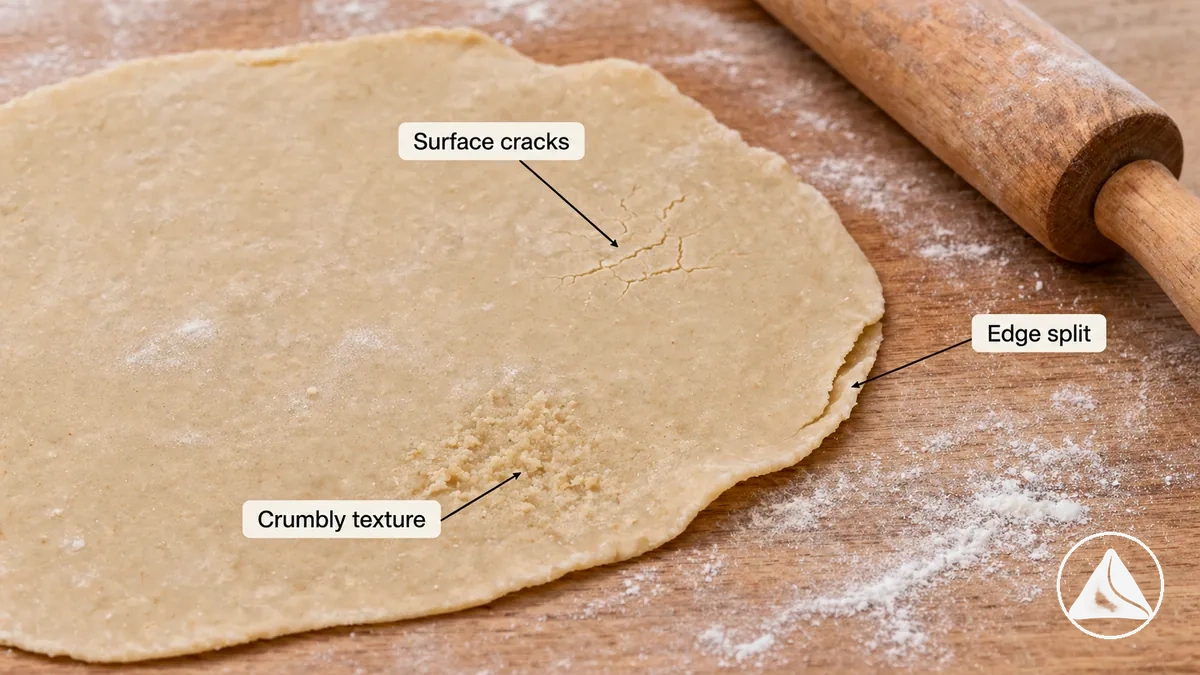
| Signal | Possible Cause | Check | Interpretation |
|---|---|---|---|
| Dry or crumbly dough before rolling | Insufficient effective moisture or overly stiff dough | Gently press and bend a small piece. Does it fracture throughout rather than remain cohesive? | Breakage through the interior suggests a problem with overall dough consistency. Reassess moisture and firmness before changing rolling technique. |
| Fine surface cracks after uncovered exposure | Surface drying during resting or waiting | Compare the exposed surface with the freshly opened interior. Is the exterior dry while the inside remains cohesive? | A dry exterior with a cohesive interior is consistent with surface moisture loss. Check how the dough was protected during resting rather than assuming the initial mixture was too dry. |
| Strong resistance or edge cracking during rolling | Excessive stiffness, uneven thickness, or concentrated rolling pressure | Does the entire pastry sheet resist flattening, or do cracks appear mainly around thin spots and heavily pressed edges? | Widespread resistance suggests excessive firmness. Localized edge splitting may indicate handling stress or thickness variation, so compare the affected areas before adjusting pressure. |
| Cracking mainly during folding | Limited flexibility at the bend, surface dryness, or localized shaping stress | Check whether the pastry had visible cracks before folding and whether the split follows a dry edge or an unusually thin area. | Cracking concentrated at a bend suggests the pastry cannot tolerate the applied folding stress. Examine its surface condition and earlier rolling behaviour to identify the more plausible contributor. |
Similar cracks can arise from different conditions, so no single signal establishes the likely cause with certainty.
A useful interpretation combines tactile texture, rolling resistance, surface dryness, and the timing of the first crack.
Compare an affected area with an intact portion of the same dough to distinguish widespread stiffness from localized damage.
If the evidence remains mixed, check the dough's condition before changing how it is rolled or folded, rather than assuming that adding water is the appropriate correction.
Signs the Dough Is Too Dry, Crumbly, or Overly Stiff
Raw samosa dough may be excessively dry, crumbly, or stiff if it breaks apart when pressed, develops persistent edge cracks, or shows strong resistance to flattening and bending.
These signs suggest reduced flexibility during shaping, but no single cue proves that insufficient moisture is the cause.
The image compares visibly crumbly dough with firm, cohesive dough to clarify texture differences without treating appearance alone as a definitive diagnosis.
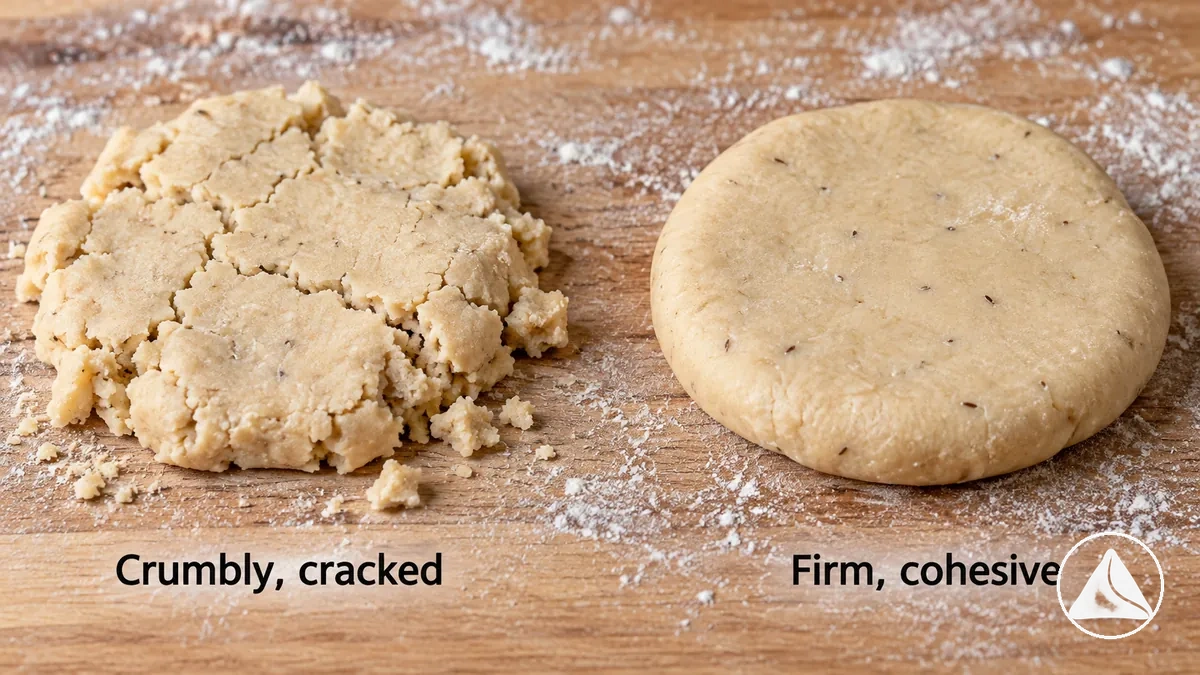
- Crumbling when pressed: Small pieces break away instead of remaining joined, suggesting poor cohesion that may make the dough difficult to roll into an intact pastry sheet.
- Persistent edge cracks: Fine splits develop or widen around the edges during gentle flattening, indicating that the outer pastry may lack sufficient flexibility to withstand shaping.
- Strong resistance to flattening: The dough remains unusually rigid under moderate rolling pressure, which may indicate excessive stiffness or insufficient relaxation rather than dryness alone.
- Limited flexibility when bent: A small portion resists bending and begins to fracture instead of flexing while remaining cohesive, suggesting that folding could place excessive stress on the pastry.
- Splitting under moderate pressure: The dough develops visible fractures during ordinary handling, indicating limited tolerance for shaping stress, although the underlying condition still requires further assessment.
Firm but cohesive samosa dough holds together during gentle pressing and bending, remains workable during rolling, and does not need to feel soft or sticky.
By contrast, dough that repeatedly crumbles or fractures throughout its interior provides stronger evidence of a consistency problem than an isolated rough patch or small surface crack.
Surface drying, inadequate resting, and handling stress can produce similar symptoms, so check whether the problem affects the entire dough or mainly its exposed surface before attributing it to insufficient moisture.
Cracking While Rolling
When samosa dough cracks while rolling, the likely cause may lie in the dough's condition or in localized rolling pressure.
Cracks that appear as the pastry resists flattening suggest insufficient flexibility or relaxation, whereas splits confined to heavily pressed areas can point toward handling stress.
The location of the first crack and how readily the dough flattens help distinguish these possibilities.
Recurring edge cracks alongside strong resistance make excessive stiffness more plausible, particularly when the dough remains cohesive rather than crumbly.
If the dough breaks into rough pieces under pressure, insufficient moisture may be contributing; if only its exposed surface develops fine splits, surface dryness is another possibility.
When an otherwise cohesive pastry sheet tears around thin spots, uneven thickness and concentrated rolling pressure become more likely triggers.
Match the next adjustment to the observed condition: allow resistant dough to rest, keep a drying surface covered, or reduce pressure on thin areas rather than adding water or flour without a supporting clue.
Cracking While Folding
When rolled samosa pastry cracks at a bend or stressed edge during folding, it suggests that the wrapper lacks sufficient flexibility to withstand the bending stress at that point.
A visible fracture line that appears only when the pastry is folded around the filling indicates localized resistance to bending, but it does not establish a single cause.
If the entire wrapper feels dry or stiff and resists bending, reduced flexibility throughout the dough becomes a more plausible contributor.
Fine cracks confined to an exposed, dry-feeling surface may indicate surface drying, particularly when the underlying pastry remains cohesive.
When splitting begins around unusually thin or unevenly rolled areas, thickness variation and concentrated folding stress become more likely; comparing the surface condition and thickness around the fracture line helps narrow the interpretation.
How to Fix Samosa Dough That Is Already Cracking
To fix samosa dough that is already cracking, match each corrective action to the diagnosed condition rather than following a universal rescue sequence.
Check whether the symptom reflects surface drying, resistance from insufficient rest, localized handling stress, or genuinely dry and crumbly dough before making the least disruptive adjustment.
- Exposed surface drying: Cover unused dough and rolled pastry with a clean, lightly damp cloth or food-safe wrap to protect them from further moisture loss. Verification cue: A small test portion remains pliable and develops no new surface cracks during gentle shaping.
- Stiff dough with strong rolling resistance: Keep the dough covered and allow it to rest briefly without additional kneading. Verification cue: A test portion flattens with less resistance and its edges remain intact under gentle rolling pressure.
- Cracks concentrated around thin or heavily pressed areas: Reduce rolling pressure and avoid stretching already thin sections of the pastry. Verification cue: A small wrapper can be flattened and bent with less splitting at stressed edges.
- Dry, crumbly dough that lacks cohesion throughout: If a pressed piece repeatedly breaks apart, add a small amount of moisture gradually and incorporate it gently, reassessing the texture between additions. Verification cue: A test portion holds together when pressed and bends without crumbling while remaining firm rather than sticky.
Test a small portion after each adjustment before continuing with the remaining dough, because improvement should be judged by its behaviour during shaping.
If added moisture makes the dough sticky or causes it to lose structure, stop adding water and reassess its current condition instead of automatically adding more flour.
Avoid aggressive reworking or large one-time adjustments that could create a different consistency problem.
Severely imbalanced dough may not recover fully, so continue only if the test portion demonstrates adequate cohesion and flexibility rather than repeating corrections without checking the result.
How to Prevent Samosa Dough From Cracking Again
To reduce repeat cracking in samosa dough, maintain a firm but cohesive texture through mixing, resting, rolling, and folding.
The following checklist verifies the moisture, surface protection, thickness, and handling conditions that help keep the dough workable and reduce the likelihood of cracking during shaping.
- Firm but cohesive texture: Check that a small piece holds together when pressed and bends gently without crumbling or splitting. The dough should remain firm enough for shaping without feeling excessively stiff or sticky.
- Controlled moisture addition: Add moisture gradually during mixing and verify that it is incorporated evenly. The dough should form a cohesive mass without dry, loose fragments or excessive stickiness.
- Protected resting: Keep the dough covered while it rests and check that it becomes easier to flatten without developing fresh edge cracks. Reduced resistance suggests that the dough is more workable before rolling.
- Covered dough during shaping: Keep unused portions and rolled wrappers protected from exposure. Check that their surfaces remain pliable rather than developing visible signs of surface drying.
- Reasonably even thickness: Examine each rolled wrapper for unusually thin areas or abrupt thickness changes before folding. A more uniform sheet reduces locations where shaping stress may concentrate.
- Moderate handling pressure: Roll and fold without excessive force or repeated stretching of thin edges. Verify that the pastry flattens and bends without new cracks forming at the points receiving the most pressure.
If repeat cracking occurs at the same stage, reassess the corresponding preparation or handling variable instead of repeatedly adding flour or water to mask the symptom.
Breakage before rolling calls for a texture check, while recurring edge cracks during rolling warrant checking relaxation, thickness, and handling pressure.
Cracks that first appear during folding suggest checking wrapper flexibility and surface condition before changing the dough mixture.
Test any adjustment on a small portion and verify that the same cracking pattern has become less frequent before continuing with the remaining dough.