
How to Control Oil Temperature When Frying Samosas
For samosas, follow the oil temperature specified by your recipe: published methods use about 149–180°C (300–356°F) across different frying approaches, not one universal target range. Measure the oil temperature, adjust burner heat gradually, and recheck after adding samosas because the oil can cool during frying.
Samosa oil temperature · At a glance
Compare the oil with your recipe, then adjust
Use the temperature your recipe calls for as the reference. The figures below describe different samosa recipes, not one combined frying range to aim for.
- Temperatures across recipes
- 149–180°C (300–356°F)
- Examples of maintained frying temperatures; the right choice depends on the recipe.
- Check what matters
- Oil, not burner setting
- A thermometer gives a reading; a dough scrap gives only a qualitative cue.
- When to recheck
- During and between batches
- Added samosas can cool the oil. Let it return to the recipe's intended condition.
The burner setting controls heat input, not the oil's actual temperature. The stove, pan, oil quantity and frying load affect how quickly the oil heats and recovers.
Check the oil before adding samosas and continue monitoring it as they fry. A thermometer provides a direct reading; without one, bubbling and the movement of a small piece of dough can only suggest whether the oil is ready.
Keeping the oil near the recipe's intended temperature can help balance browning, crispness and oil absorption. Temperature control is one part of the broader samosa preparation process.
Table of Contents
The Target Oil Temperature Range for Frying Samosas
Across the recipes compared here, maintained oil temperatures range from approximately 149°C to 180°C (300°F to 356°F). This is a span of different methods, not a single recommended cooking band for every samosa.
Food Network recipes by Emeril Lagasse specify different temperatures for slower and faster frying, while Good Food's vegetable samosa recipe specifies 180°C (356°F).
The suitable working range depends on the pastry and frying method, with oil temperature influencing cooking pace, browning rate and crispness.
Oil that becomes hotter than the intended working range can brown the pastry before it cooks through, while cooler-than-target oil can extend cooking time and affect oil absorption.
A kitchen thermometer helps monitor these changes as samosas fry, making the actual oil temperature visible rather than relying on burner heat alone.
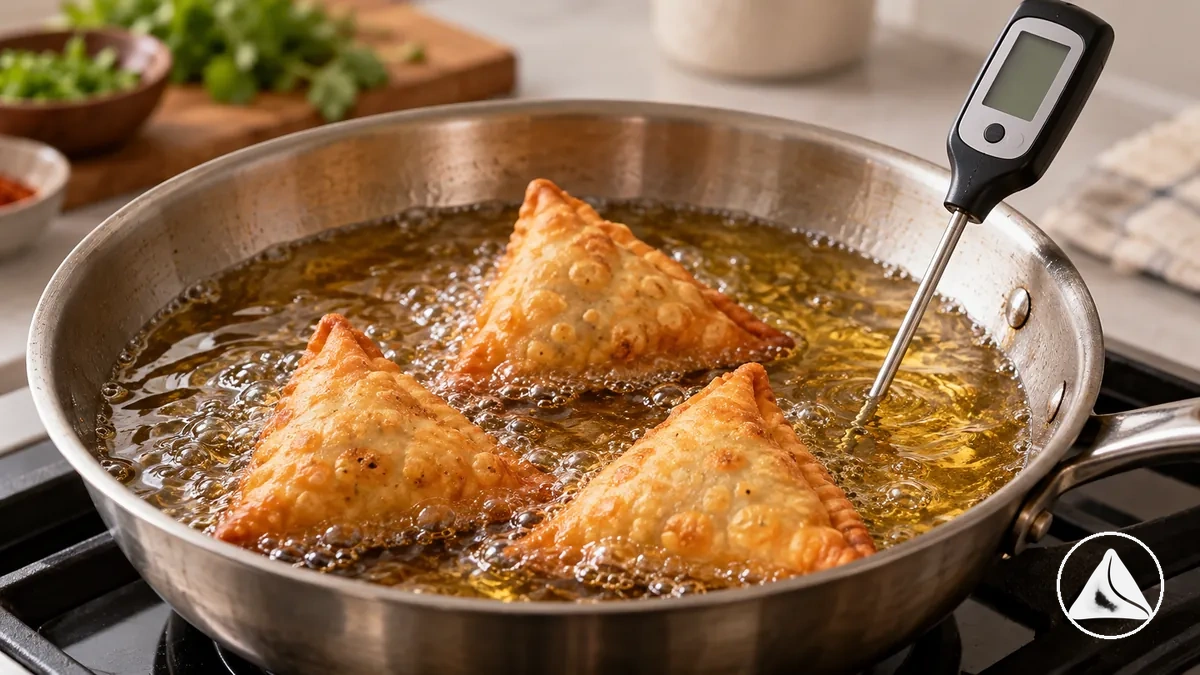
The table compares recipe-specific maintained frying temperatures and their likely effects on cooking pace; they are examples, not universal temperature thresholds.
| Oil temperature state | Celsius / Fahrenheit guidance | Likely frying behaviour | Practical implication |
|---|---|---|---|
| Lower maintained frying temperature — Emeril Lagasse, Food Network | Approximately 149°C / 300°F | Slower browning allows more time for the pastry to cook before developing a golden crust. | Maintain the lower cooking temperature specified by the recipe rather than the hotter preheat temperature. |
| Intermediate frying temperature — Emeril Lagasse, Food Network | Approximately 171°C / 340°F | Faster browning than the lower-temperature approach, with a shorter cooking period under comparable conditions. | Follow the recipe-specific temperature and check that the pastry becomes crisp and golden before removal. |
| Higher recipe-specific frying temperatures — Maneet Chauhan, Food Network; Good Food | Approximately 177°C / 350°F (Food Network) or 180°C / 356°F (Good Food) | Faster exterior browning may occur, requiring closer attention to the pastry's colour and cooking progress. | Use the higher temperature when specified by the recipe, adjusting heat if the pastry darkens before it is cooked through. |
How to Check Whether the Oil Is Ready for Samosas
Check samosa oil readiness directly with a thermometer or, when one is unavailable, infer its condition from a small pastry scrap. Its bubbling, rising and browning provide qualitative clues only; they do not establish a temperature in °C or °F.
Dassana's Veg Recipes describes a steady rise without rapid browning as a readiness cue for onion samosas, although the expected response can differ with the pastry and frying conditions.
Use the dough's movement and browning together rather than treating any one cue as proof of the oil temperature:
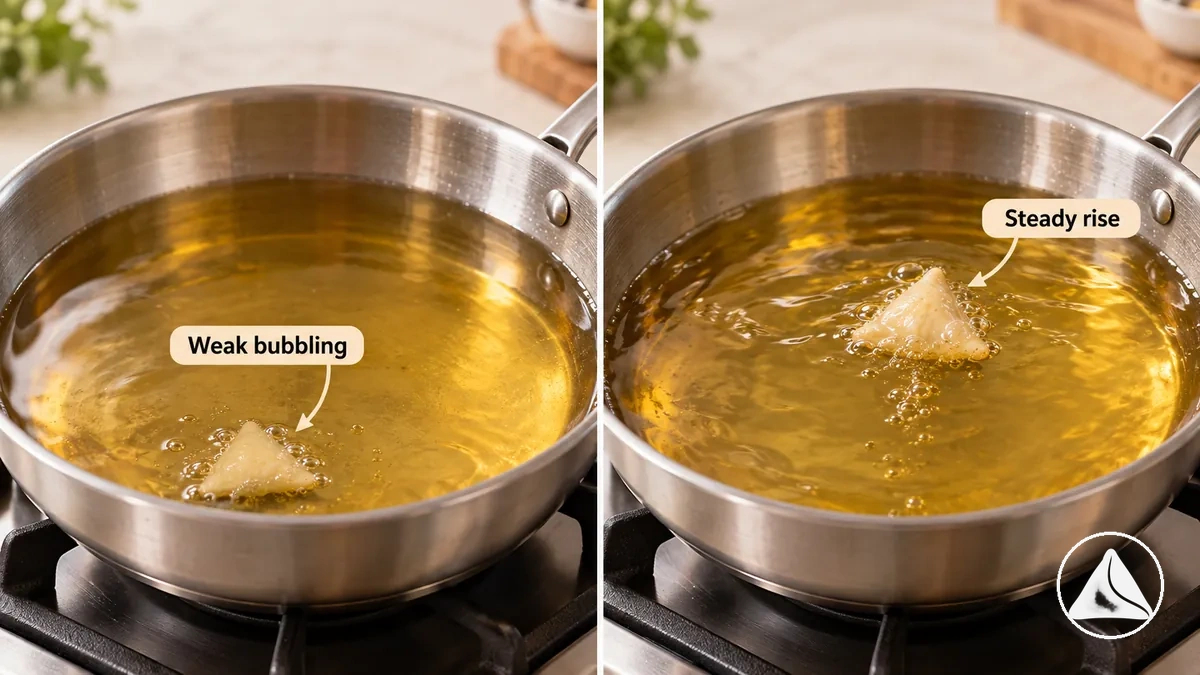
- Too cool: A small dough piece stays near the bottom with weak bubbling and little upward movement. This suggests the oil may be below the intended starting temperature. Increase the heat gradually and check again before adding samosas.
- Usable: The dough piece rises gradually or steadily with controlled bubbling and without browning too quickly. This response is consistent with oil that may be ready for the selected samosa recipe. Proceed while monitoring the first samosa's browning.
- Too hot: The dough piece shoots rapidly towards the surface, bubbles vigorously or browns almost immediately. This suggests the oil may be hotter than the intended starting condition. Reduce the burner heat and allow the oil to cool slightly before checking again.
Measuring Oil Temperature With a Thermometer
A kitchen thermometer gives the oil temperature rather than the burner setting. Take a stable reading with the sensing tip immersed as directed by the manufacturer, clear of the pan's base and sides, and compare it with your recipe's target in Celsius or Fahrenheit.
Adding samosas can temporarily lower the oil temperature, so the initial reading may change once frying begins.
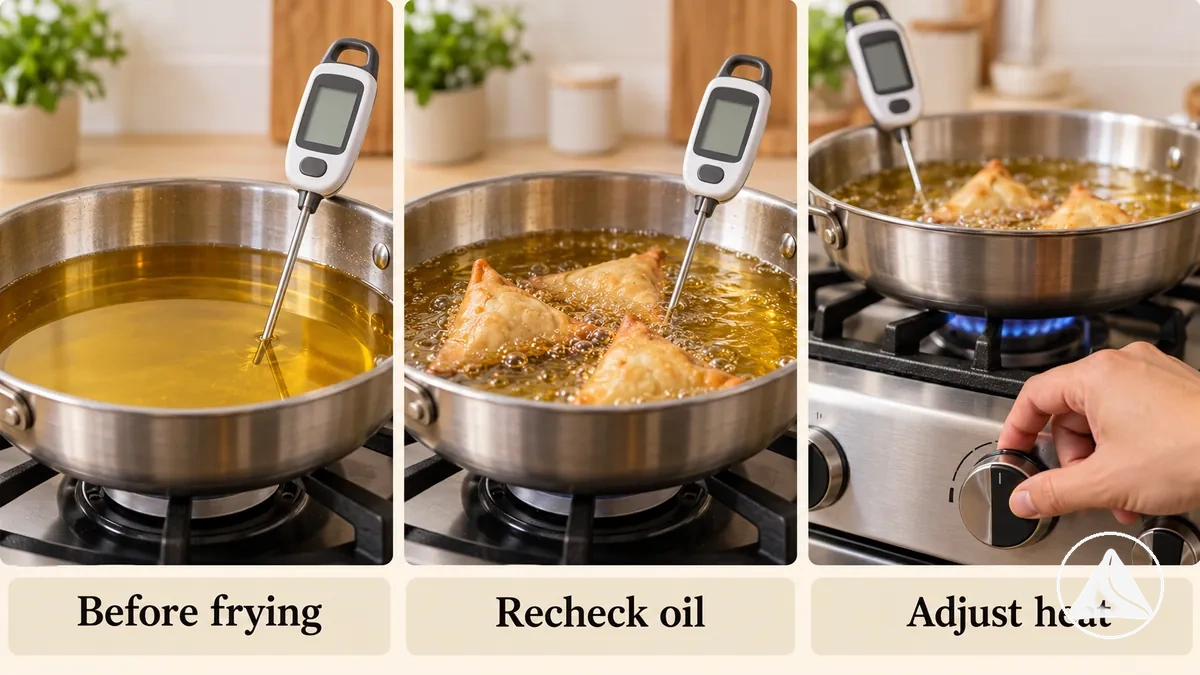
- Measure the oil temperature: Place the thermometer's sensing tip in the frying oil according to the device's instructions. Allow the reading to stabilise before noting the temperature in Celsius or Fahrenheit.
- Compare the reading with the working range: Check whether the measured oil temperature falls within the range specified for the samosa recipe. If the oil is below the intended range, allow it to heat further before adding the samosas. If it is above the range, reduce the heat and allow the oil to cool.
- Recheck after adding samosas: Measure the oil temperature again after the samosas enter the pan. Adding cooler food can lower the oil temperature, so compare the new reading with the working range to determine whether further adjustment is necessary.
- Adjust the heat and verify: Increase burner heat gradually if the oil remains below the working range, or reduce it if the temperature is too high. Recheck the thermometer after the adjustment to verify that the oil has returned to the intended range, and continue monitoring during frying.
Checking Oil Readiness Without a Thermometer
Without a thermometer, add a small dough piece or pastry scrap and watch whether it sinks, rises towards the surface and bubbles. This provides an indication of readiness, not an exact temperature.
My Food Story describes how a small dough sample that sizzles and rises can indicate heated oil, while immediate browning suggests excessive heat.
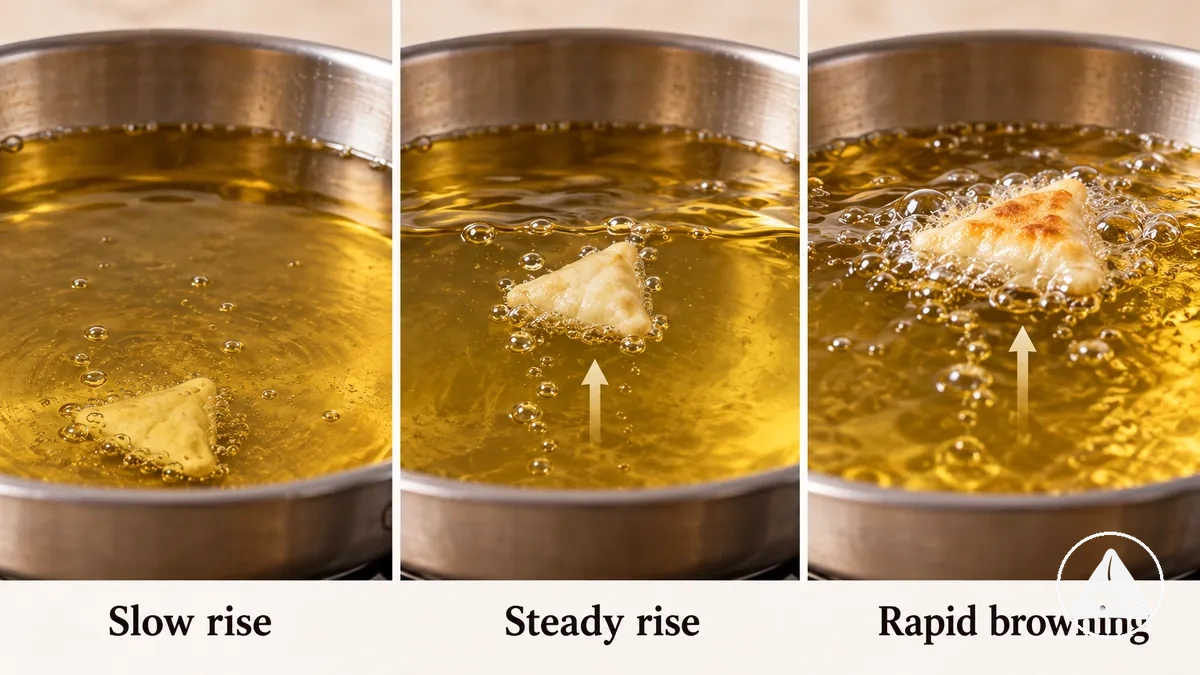
- Sluggish response — oil may be too cool: The dough piece sinks towards the bottom, produces weak bubbling and rises slowly or remains submerged. This suggests the frying oil may need more heat. Allow it to warm further, then repeat the test before adding samosas.
- Steady response — oil may be usable: The pastry scrap begins to rise towards the surface with steady, controlled bubbling and does not brown immediately. This behaviour is consistent with oil that may be ready for the intended samosa frying method. Begin frying cautiously and observe how the first samosa responds.
- Excessively vigorous response — oil may be too hot: The dough piece rises very rapidly, produces strong bubbling or starts browning almost immediately. These signs suggest that the oil may be hotter than the intended frying condition. Reduce the burner heat, allow the oil to cool slightly and repeat the test before continuing.
How to Adjust Burner Heat While Frying Samosas
Adjust burner heat while frying samosas according to the oil's measured temperature or observable frying response, rather than relying on a fixed low, medium or high stove setting.
Burner heat is the input; oil temperature is the condition to control. The same low, medium or high stove setting can produce different readings depending on the pan, oil quantity, stove and frying conditions.
Adding samosas can cool the oil as heat passes into the pastry. Batch size, oil quantity and starting temperature influence how large that drop is and how quickly the oil recovers.
Increasing burner heat too aggressively may cause the oil to become hotter than intended as it recovers, so adjust gradually and check the oil's response.
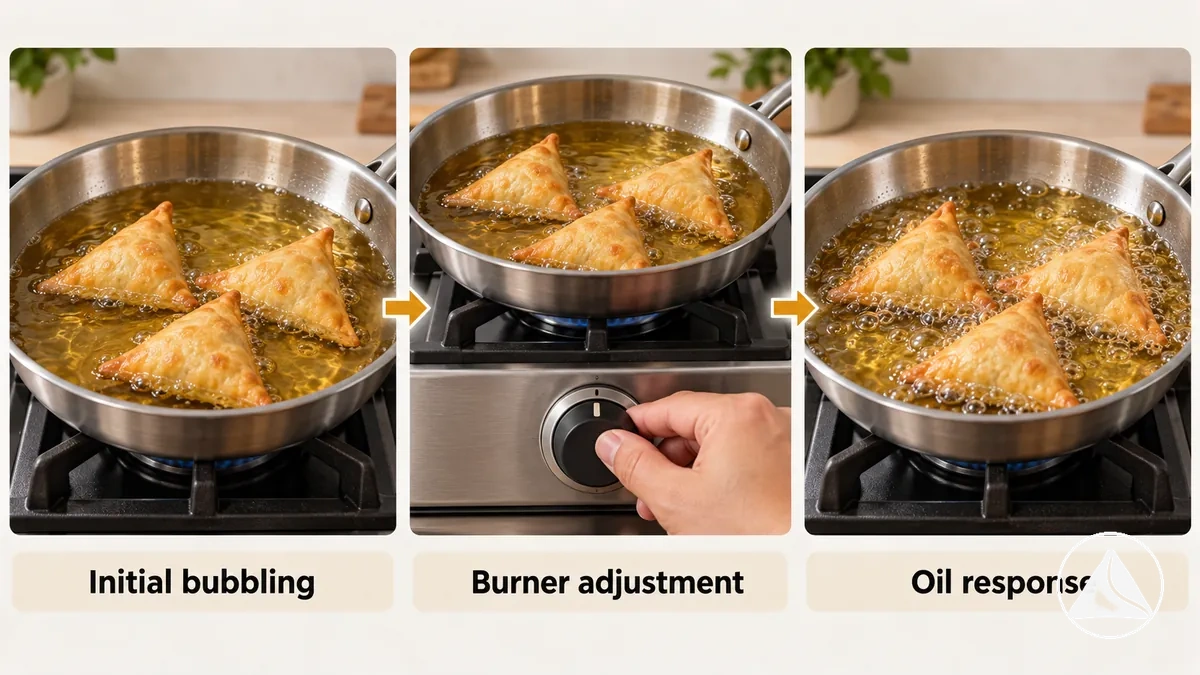
- Establish the intended oil condition: Heat the frying oil until its measured temperature is within the recipe's working range, or its observable behaviour is consistent with the intended starting condition. Use the actual oil state rather than the stove's heat label to determine readiness.
- Add the samosas: Place the samosas into the oil once the intended frying condition has been reached. Their addition changes the frying load and can temporarily lower the oil temperature.
- Observe or measure the temperature response: Recheck the measured temperature when a thermometer is available, or monitor changes in bubbling and browning as qualitative indicators. Compare the response with the condition needed for the selected samosa frying method.
- Adjust burner heat gradually: Increase heat input if the oil remains below the intended working condition, or reduce it if the oil becomes too hot. Allow the oil to respond, then verify the temperature or observable frying behaviour before making another adjustment.
- Allow recovery before the next batch: After the current batch, let the oil return towards the intended working range. Verify its measured temperature or observable readiness before adding more samosas instead of assuming the previous burner setting will produce the same result.
Before the next batch, let the oil recover towards the recipe's intended range. The recovery time is not fixed: check the actual oil temperature or its observable response rather than using a timer or assuming the old burner setting is still suitable.
This adjustment loop addresses temperature regulation, while the broader process of how to fry samosas includes frying tasks beyond heat control.
How Oil Temperature Affects Samosa Crispness and Browning
Oil temperature affects samosa crispness, browning and crust development, but it is not the only factor determining the final texture.
Frying temperature affects how quickly the exterior loses moisture, firms up and develops colour. When the outside browns faster than heat reaches the pastry and filling, the samosa can look ready before it is cooked through.
Cooler-than-target oil can slow crust formation and extend frying time. Under those conditions, longer contact with the oil may contribute to increased oil uptake and lower crispness, although dough composition and moisture loss also affect the outcome.
A controlled oil temperature helps the exterior develop colour at a pace that supports cooking balance between the crust and interior, whereas hotter oil can accelerate browning before the pastry cooks through.
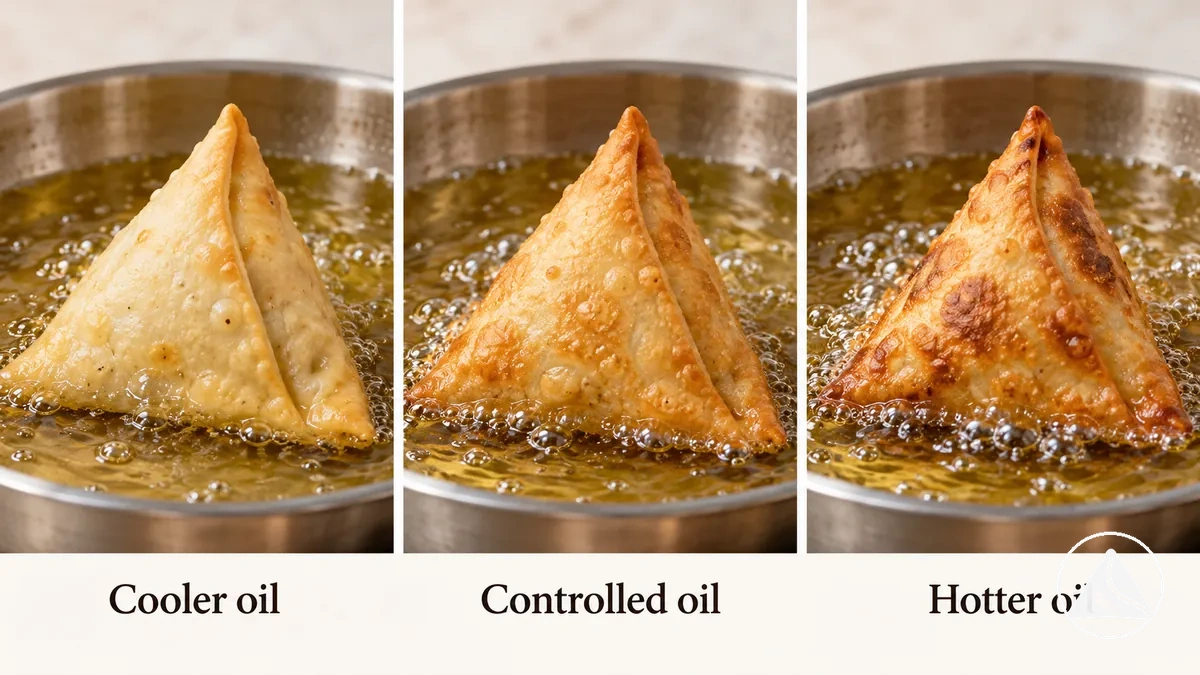
- Cooler-than-target oil: The samosa crust may set slowly and develop colour gradually, potentially leaving the exterior less crisp. Longer frying exposure can also influence oil uptake, so a pale, slowly browning shell may indicate that the oil needs more heat.
- Controlled oil temperature: The exterior can firm and brown progressively while the pastry cooks towards the interior. This supports a crisp crust and more balanced cooking, provided the frying temperature matches the recipe and pastry thickness.
- Hotter-than-target oil: The exterior can brown rapidly or become excessively dark before the thicker pastry is cooked through. This creates a cooking imbalance in which crust colour develops ahead of the interior, indicating that the heat may need reducing.
Too-Cold Oil: Slow Browning and Greater Oil Absorption
Low oil temperature can slow the setting and browning of a samosa's exterior when the frying oil is cooler than the recipe requires.
- Cooking response
- Delayed crust development can leave the surface soft for longer, slowing browning and extending frying time. Longer contact with oil may contribute to greater oil uptake.
- What you may see
- Unusually slow browning, reduced crispness or a greasy-looking finished samosa.
- Interpretation limit
- These are possible temperature-related clues, not proof that cool oil caused greasiness; pastry composition and moisture content also affect absorption.
- What to do
- Check the oil against your recipe's intended range. If it is below that range, raise burner heat gradually and recheck.
Too-Hot Oil: Fast Browning Before the Pastry Cooks Through
Too-hot frying oil can accelerate browning on a samosa's exterior before the thicker pastry has enough time to cook through.
- Cooking response
- The outer crust can darken before enough heat reaches the pastry and filling, increasing the risk of an over-browned exterior and undercooked interior.
- What you may see
- Rapid colour development, unusually quick darkening or patches that approach burning.
- Interpretation limit
- Fast browning may indicate excessive oil heat, but dough composition, pastry thickness and other frying conditions also influence colour; this is not a definitive diagnosis.
- What to do
- Check the oil temperature against your recipe and, if it is above the intended range, reduce the heat and allow the oil to cool towards that range before continuing.