
Why Samosas Become Oily or Greasy
Samosas become oily or greasy when oil is retained in the pastry shell, left as surface residue after frying, or both. Oil-temperature drops, large batches and dough structure can contribute to internal oil uptake; inadequate draining leaves exterior oil, so blot the outside and check a broken edge before choosing a correction.
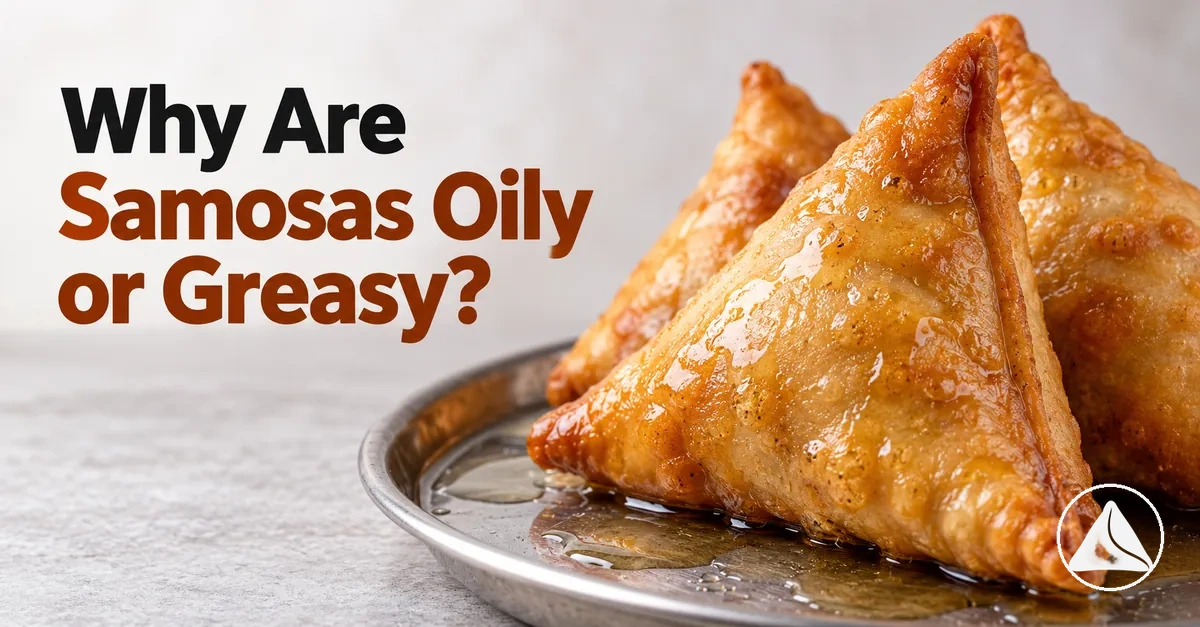
Where is the oil making your samosas greasy?
Use two observations to distinguish surface residue from oil retained in the pastry. These checks suggest where to investigate, not a certain cause.
Use clean absorbent paper and compare before and after.
Examine the pastry, not just the filling or glossy exterior.
What your observations suggest
Start with the two checks
Blot the outside first. Then look at a broken pastry edge for oiliness that remains through the shell.
Next step: Compare the exterior with the pastry underneath. How to identify the source.
A surface sheen alone cannot prove where oil has been retained. Surface oil and absorbed oil can occur together.
Frying temperature, batch size and pastry structure affect moisture loss and crust formation, while draining controls oil remaining outside. Greasiness and loss of crispness can overlap, but they are not the same problem.
Table of Contents
What Causes Samosas to Absorb Too Much Oil
Samosas can absorb too much oil when frying conditions or pastry structure alter moisture loss, crust formation, and the amount of oil retained in the casing.
Two contributing categories are the frying environment, which affects heat transfer and cooking time, and the pastry itself, which influences how moisture escapes and oil enters the crust.
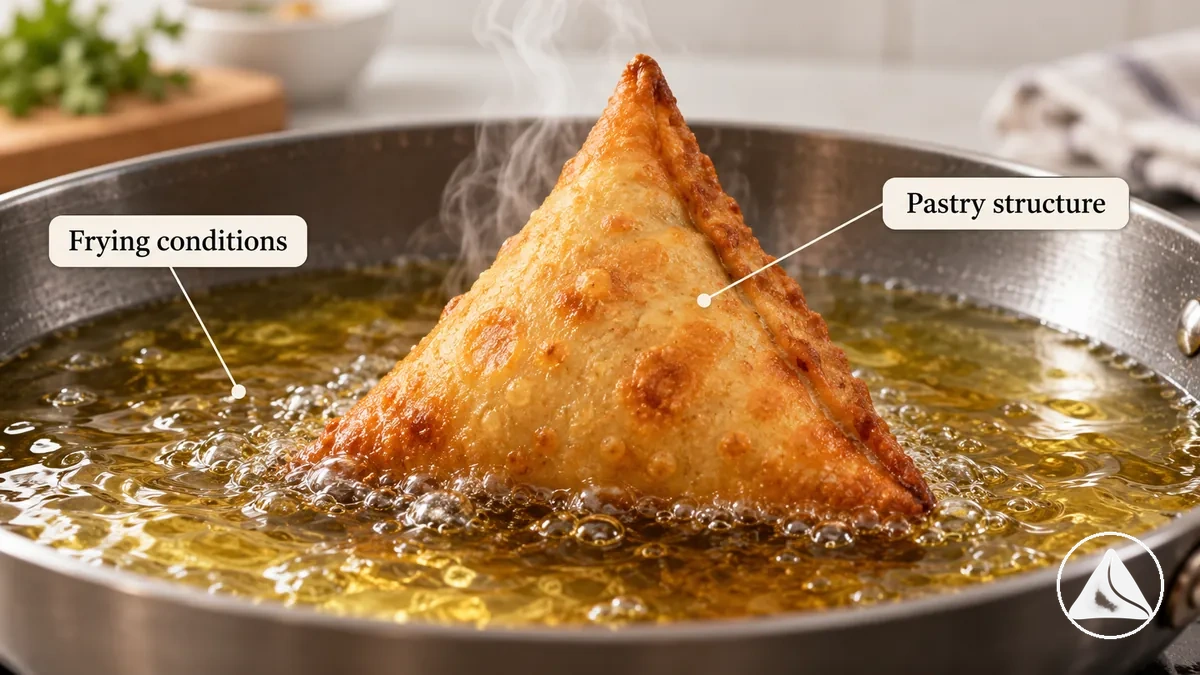
Two interacting contributors to oil retention
- Frying environment
- Key attributes: oil-temperature stability, batch size and heat recovery.
- Possible effect: a large temperature drop can delay crust development and prolong frying, potentially increasing oil retained in the casing.
- Pastry structure
- Key attributes: dough moisture, wrapper thickness and casing integrity.
- Possible effect: these change how steam escapes, how crust pores form and where oil may enter or remain within the pastry.
The timing matters: moisture escaping as steam can leave spaces in the crust where oil subsequently collects. A review by Dana and Saguy in Advances in Colloid and Interface Science describes water replacement and oil uptake during cooling, so retention is not limited to the period in hot oil.
A study by Sakhale and colleagues published in the Journal of Food Science and Technology documented moisture loss and oil uptake in fried samosa casings, supporting the connection between casing characteristics and retained oil.
Frying conditions and pastry structure are distinct but interacting contributors; neither explains every greasy samosa on its own.
Frying Temperature and Oil Conditions
Oil that is too cool or drops substantially in temperature after samosas are added can contribute to greasy pastry by slowing crust formation and extending cooking time.
The temperature drop and subsequent heat recovery depend on the starting oil temperature, batch size, and heating capacity, as illustrated by samosas entering the frying oil.
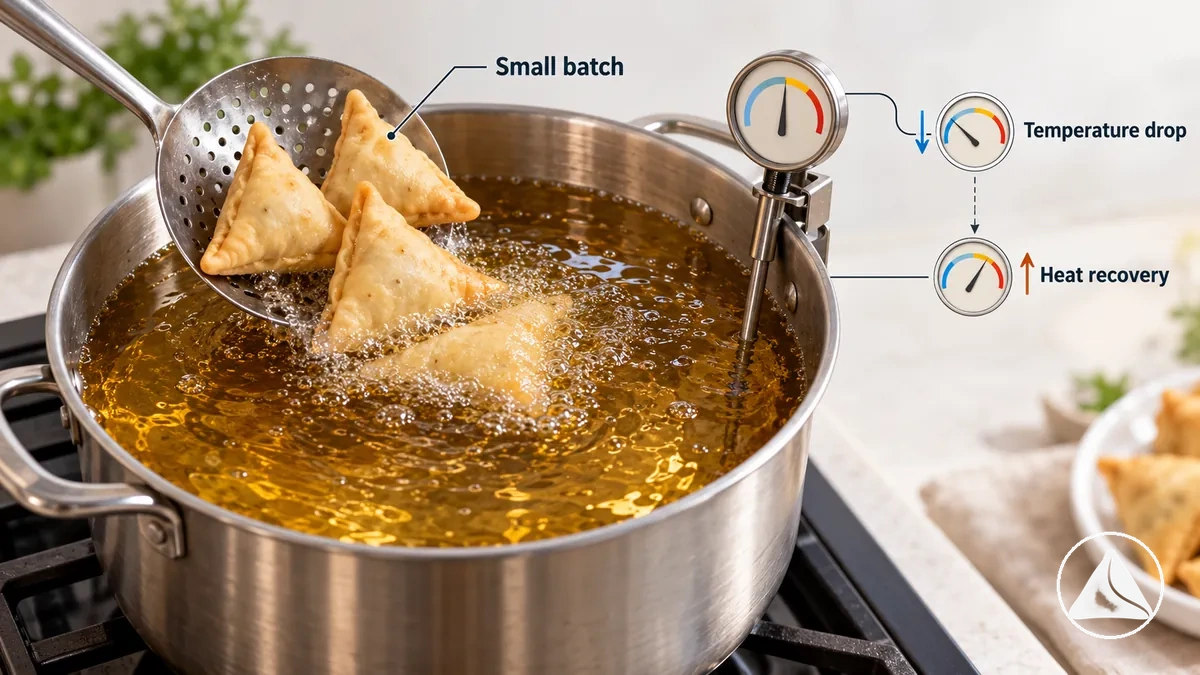
Adding samosas transfers heat from the frying oil into the cooler pastry, causing a temperature drop.
The size of this heat loss and the rate of heat recovery influence how steadily the pastry cooks and develops its crust.
- Temperature stability: Oil that maintains a relatively steady cooking temperature supports more consistent crust formation. Oil that remains too cool can delay crust development and contribute to greater oil retention.
- Batch load: Adding a large batch of samosas can produce a substantial temperature drop when the food absorbs heat faster than the cooking equipment replaces it. This may prolong frying and increase exposure to oil.
- Heat recovery: Slow heat recovery keeps the oil below its intended frying temperature for longer, potentially delaying moisture loss and crust development in the samosa casing.
- Cooking time: Extended frying under excessively cool conditions can increase the opportunity for oil retention, although the amount absorbed also depends on the pastry and its moisture content.
Higher heat is not automatically better. Follow the frying temperature appropriate to the pastry and cooking method, check the oil with a thermometer before and after adding a batch, and let it recover towards that setting before adding more samosas. Heat that is too high can brown the exterior before the casing cooks evenly.
Dough Moisture and Pastry Structure
Samosa pastry can retain different amounts of oil depending on dough moisture, firmness, wrapper thickness, and the structural integrity of its casing.
These attributes influence moisture loss and crust formation during frying, so differences in pastry structure can change frying behavior and oil uptake even under similar oil conditions.
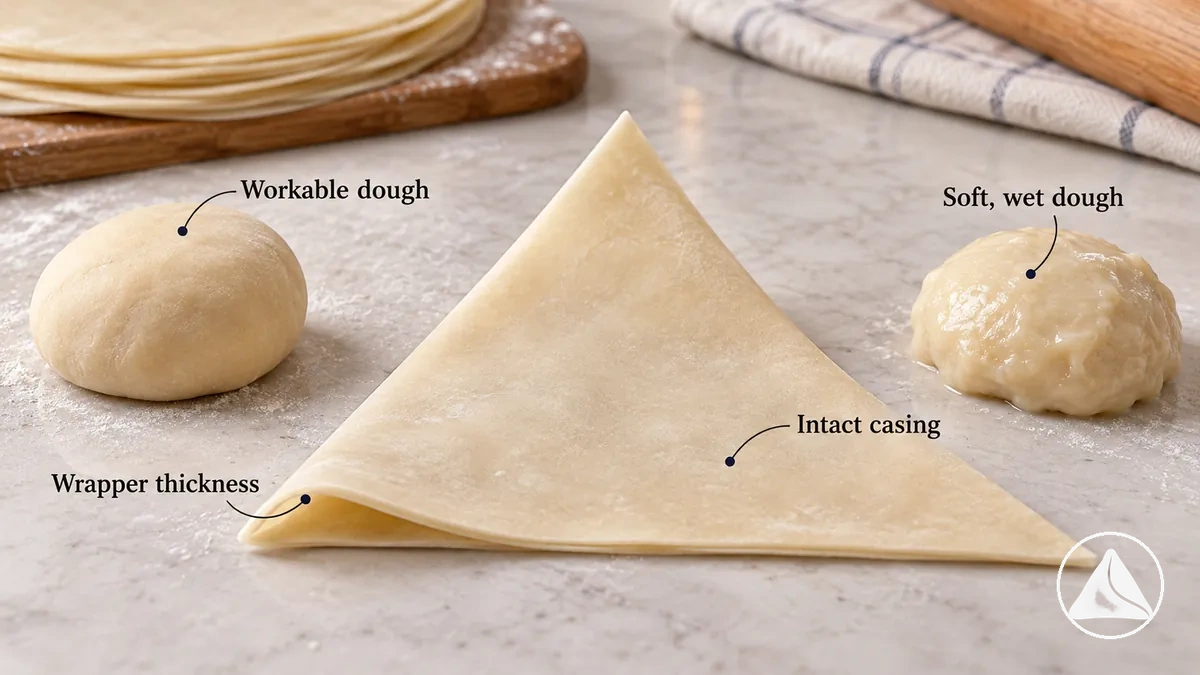
Dough firmness influences how well the casing maintains its shape as it heats, while wrapper thickness affects how evenly moisture escapes.
Surface moisture turns to steam during frying, and the resulting changes in crust development may influence where oil is retained as the pastry cooks and cools.
- Overly soft or wet dough: Excess dough moisture can reduce casing firmness and contribute to uneven crust formation, potentially changing the amount of oil retained in the pastry.
- Surface moisture: Water on the pastry exterior evaporates during frying, affecting local crust development and potentially influencing subsequent oil uptake.
- Uneven wrapper thickness: Thin and thick areas of the same casing heat and lose moisture at different rates, which can produce inconsistent crust formation and variations in oil retention.
- Weakened casing structure: Cracks or fragile areas may expose additional pastry surfaces to frying oil and create localised opportunities for oil absorption.
Drier dough is not automatically less oily. Aim for pastry that can be rolled and sealed without cracking yet remains firm enough to hold its shape; excessive dryness can weaken flexibility and casing integrity. Oil retention also depends on the formulation and frying conditions.
How to Identify the Source of Greasiness
To identify the source of greasiness in samosas, first distinguish between surface oil left on the pastry, absorbed oil retained within the shell, or a mixture of both.
The two states can produce a similar greasy result, but comparing the exterior with the pastry beneath the surface helps determine which is more likely.
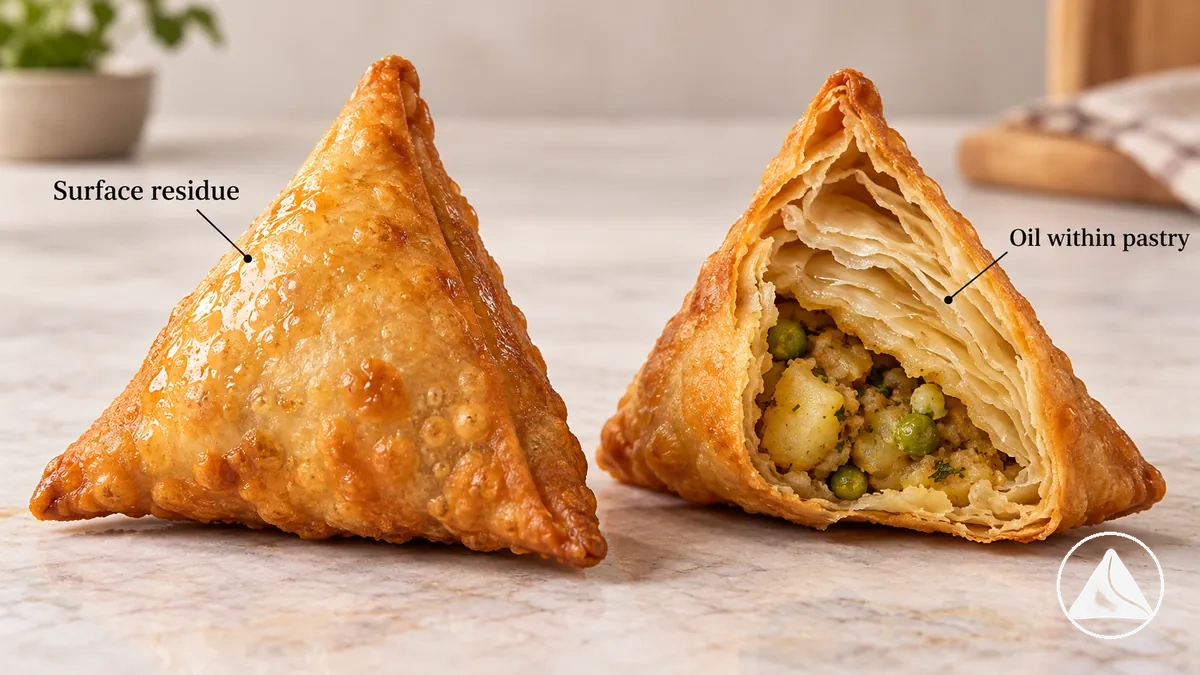
A visible sheen can indicate oil on the samosa exterior, while oil transfer during draining shows that some residue remains accessible at the surface.
Gentle blotting with clean absorbent paper provides a simple way to observe whether that residue can be lifted away.
Greasiness that persists through the pastry shell after blotting makes internal oil absorption more plausible.
The useful distinction is how the pastry responds to these checks, rather than how shiny it looks immediately after frying.
- Mainly surface residue: Signal: A noticeable surface sheen or oil transfer during draining. Check: Gently blot the exterior with clean absorbent paper and reassess its surface. Interpretation: If the greasy coating becomes noticeably less apparent, surface oil is likely a major contributor. Next decision: Examine the remaining exterior residue separately from oil within the pastry.
- Likely internal uptake: Signal: The pastry remains greasy after the visible surface oil has been blotted away. Check: Examine a broken edge of the casing for persistent oiliness through the shell. Interpretation: Greasiness within the pastry is consistent with absorbed oil rather than surface residue alone. Next decision: Examine internal oil retention as the more plausible source.
These observations are indicators, not definitive tests: surface oil and absorbed oil can coexist in the same samosa.
The next diagnostic decision is whether the stronger evidence points towards exterior residue, internal oil uptake, or both, without assigning a specific frying cause from appearance alone.
Oil Absorbed Into the Pastry
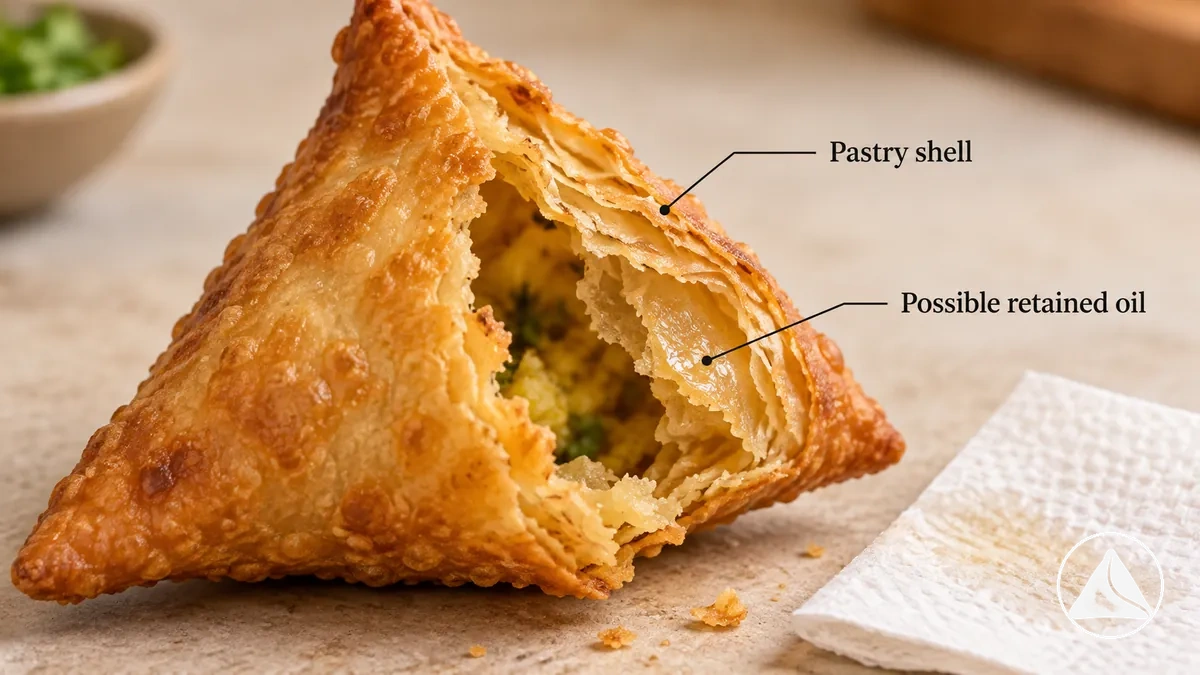
After blotting away the surface oil, break open one samosa and examine the pastry at its freshly exposed edge. The check compares oiliness through the casing with residue on the exterior; it does not prove a single cause.
Excess Oil Left on the Surface After Frying
Surface oil is likely a major contributor to samosa greasiness when a visible sheen, noticeable oil transfer, or greasy residue on the exterior pastry decreases after brief draining or blotting.
Freshly fried samosas may also leave small amounts of oil at contact points, such as where the pastry rests on a plate or absorbent surface, indicating that some grease remains on the outside.
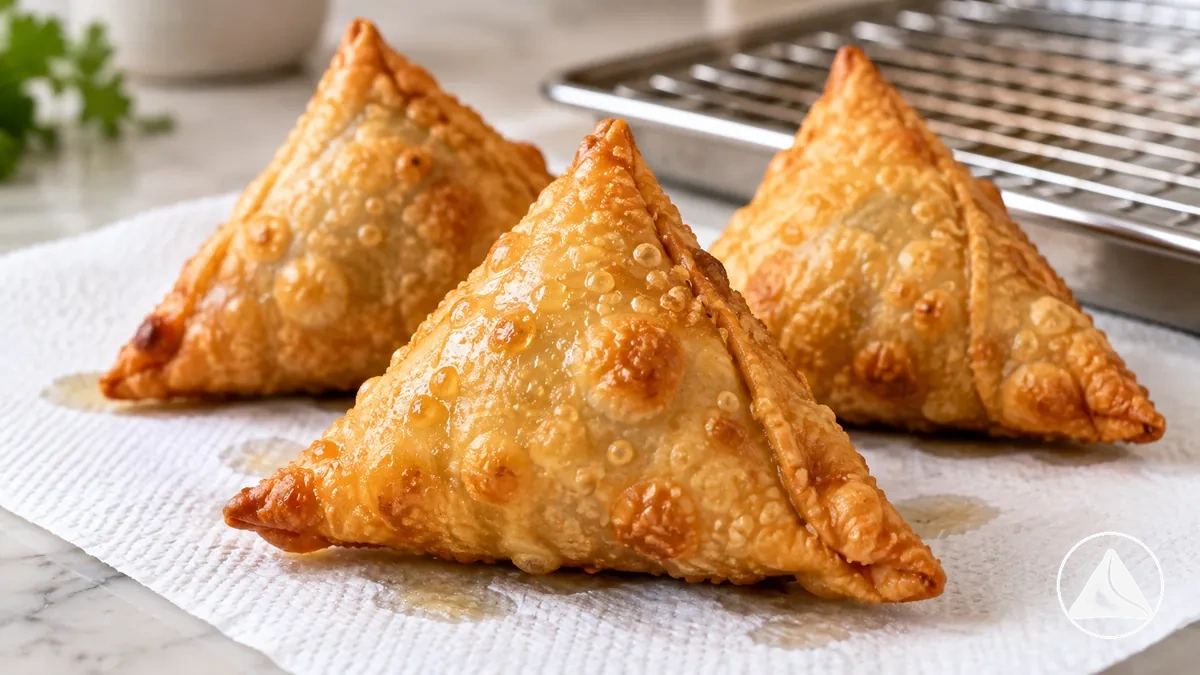
- Before draining or blotting
- Look for a visible sheen, oil transfer at contact points or a greasy coating on the outside.
- After brief rack resting or gentle blotting
- A clear reduction in sheen or grease transfer suggests that surface oil contributed to the original greasy feel.
Less oil on the exterior does not rule out oil retained inside the pastry. The full draining sequence appears later in this article.
How to Reduce Oil Absorption and Excess Grease
To reduce oil absorption and excess grease in samosas, match the correction to the observed condition rather than relying on one universal trick. Frying instability, pastry structure and exterior residue call for different adjustments.
Which condition should you change?
- Unstable frying temperature or overloaded pan
- If the oil cools markedly after loading, use smaller batches, monitor its temperature and let it recover to the intended frying temperature before the next batch. The suitable setting depends on the pastry, method and equipment.
- Wet, uneven or damaged pastry
- If dough is sticky, wrappers vary greatly in thickness or casings tear, adjust moisture and firmness towards a workable dough, roll more evenly and protect the seams. The effect on oil uptake still depends on the dough formulation and frying conditions.
- Oil remaining on the exterior
- If the coating decreases after blotting, allow oil to drip off, rest samosas in a single layer on a rack or clean absorbent paper, and blot remaining residue gently. Draining cannot remove oil already absorbed into the casing.
These are grease-specific corrections; broader preparation topics belong in the general samosa guide.
Correct the Frying Conditions
If samosas turn greasy, check the frying conditions for temperature instability, excessive batch load, and poor heat recovery before changing several variables at once.
These problems can contribute to excess oil retention, so the correction should address the specific condition observed rather than simply increasing the heat.
Temperature stability, batch load, and heat recovery should be checked together because adding samosas changes the temperature of the frying oil.
Oklahoma State University Extension explains that oil temperature drops when food enters a batch fryer and recommends allowing it to recover to the intended setting before the next batch.
Use the following checks to identify which part of the frying environment may be contributing to a greasy result; rapid browning alone is not a reliable indication of correct frying conditions.
- Temperature stability: If the oil temperature drops substantially after adding samosas and remains below the intended frying setting, unstable heat may be contributing to oil retention. Check the temperature before and after loading, then adjust heat control to support steadier frying conditions.
- Batch load: If adding many samosas produces a pronounced temperature drop, the batch may exceed the equipment's effective heating capacity. Check whether a smaller batch maintains a steadier temperature and reduce the load if necessary.
- Heat recovery between batches: If the next batch begins before the oil has returned towards its intended temperature, insufficient recovery may prolong frying under cooler conditions. Check the temperature between batches and allow adequate recovery before continuing.
- Frying environment consistency: If similar batches produce different levels of greasiness, changes in heat input, oil level, or temperature measurement may be affecting the cooking conditions. Check these variables across batches and correct any inconsistency before changing other factors.
These checks address grease-related frying instability; the broader cooking sequence belongs in the samosa frying method.
Adjust Pastry Conditions That Increase Oil Uptake
When greasy samosas appear to result from the dough or casing, adjust the specific pastry condition implicated in oil uptake rather than changing the frying environment alone.
Excess dough moisture, unsuitable dough firmness, uneven wrapper thickness, or weakened casing integrity can contribute to inconsistent frying behaviour and oil retention.
The corrective direction should match the condition observed, whether it involves the dough's moisture level and firmness or the physical structure of the pastry.
Surface dryness also matters because moisture remaining on the exterior can influence local crust formation during frying, while suitable adjustments depend on the dough formulation and cooking conditions.
- Dough moisture level: If the dough is excessively wet or sticky, its casing may develop an uneven crust and retain oil inconsistently. Reduce excess moisture only enough to achieve a workable consistency that maintains its shape.
- Dough firmness: An overly soft casing may distort during frying, contributing to uneven crust development and potentially affecting oil uptake. Adjust the dough consistency towards a cohesive, manageable firmness without making the pastry brittle.
- Surface dryness: Visible moisture on the pastry exterior can affect how evenly the surface heats and develops its crust. Allow excess surface moisture to dissipate before frying so the casing enters the oil with a more consistent surface condition.
- Wrapper thickness: Unevenly rolled pastry can cook and lose moisture at different rates across thin and thick areas, potentially producing variations in retained oil. Maintain reasonably uniform wrapper thickness without relying on a universal thickness measurement.
- Casing integrity: Cracks, tears, or fragile areas can expose additional pastry surfaces to frying oil and create local opportunities for oil retention. Handle and shape the casing carefully to maintain its structural integrity during frying.
Excessively drying the pastry or relying on unsupported additive tricks is not a reliable solution, because reducing moisture without limit can compromise casing flexibility and does not guarantee lower oil uptake.
Drain Fried Samosas to Remove Surface Oil
To drain fried samosas, allow excess oil to drip away and then rest the samosas on a suitable draining surface.
Draining removes surface residue, not oil already absorbed into the pastry. It can improve the greasy exterior without correcting the conditions that caused oil retention inside the casing.
The draining sequence helps remove visible grease while allowing steam to escape from the hot pastry.
Absorbent paper captures oil where it contacts the samosa, while a wire rack provides more space for oil to drip away and steam to escape.
Neither surface guarantees a crisp result, so use the following steps to manage excess oil and reassess the exterior.
- Lift and allow excess oil to drip: Carefully lift each cooked samosa from the frying oil using a suitable utensil. Hold it briefly above the pan so loose surface oil can drip back into the oil.
- Transfer to a draining surface: Place the samosas on clean absorbent paper or a wire rack positioned over a tray. Paper absorbs some surface residue, while a rack allows oil to drip beneath the pastry.
- Keep the samosas spaced apart: Arrange them in a single layer with small gaps between pieces. Avoid immediate stacking, which can trap escaping steam and allow surface oil to transfer between samosas.
- Allow a brief rest: Leave the samosas spaced apart until visible dripping has slowed while steam escapes. The amount of surface oil removed depends on the draining surface and how much residue was present.
- Reassess the exterior: Check whether the visible oily sheen or grease transfer has decreased. If surface residue remains, gently blot it with clean absorbent paper, recognising that this does not remove oil retained inside the pastry.
Draining addresses surface grease; broader techniques to improve samosa crispness involve additional factors beyond post-frying oil removal.